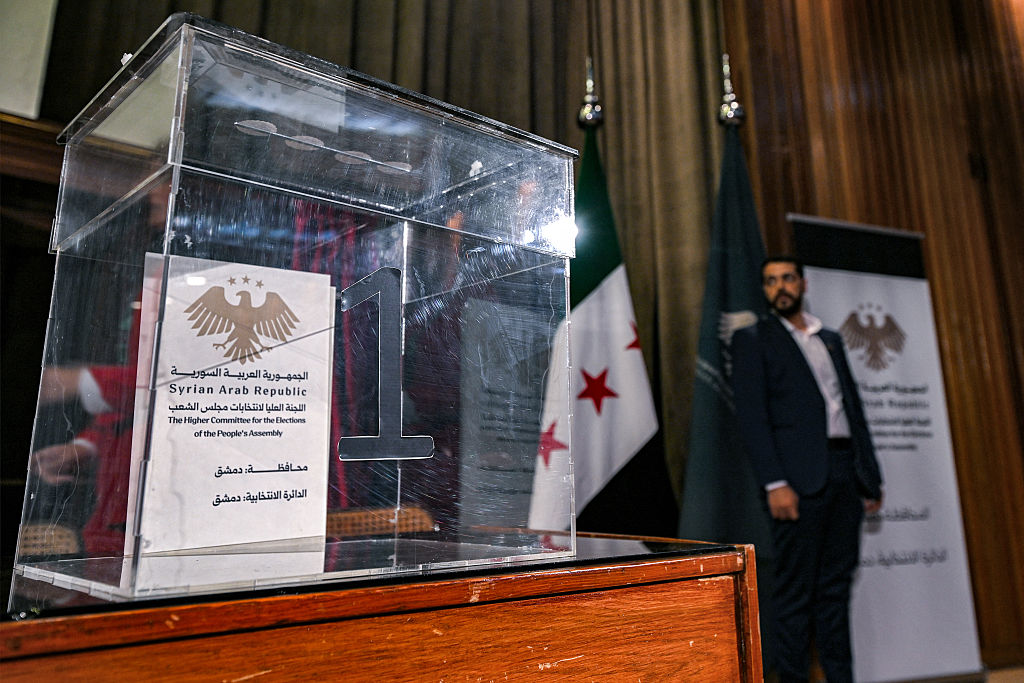
Ballot boxes closed across Syria on Sunday in the country’s first parliamentary elections since the collapse of the Assad regime by rebel forces last year.
Election officials worked late into the evening counting votes for a 210-seat parliament that will operate under a transitional system splitting power between elected representatives and presidential appointees. Election spokesman Nawar Najmeh told state television that final results are expected to be announced later today.
President Ahmad al-Sharaa, overseeing voting at Damascus’s National Library polling center, called the election “a historic moment for Syrians,” noting the country had organized the electoral process within months of the regime change.
“This moment is crucial for all Syrians. It is time to rebuild our nation together,” he said.
Syria’s new parliament faces an ambitious mandate, having to draft a constitution and prepare the groundwork for direct public elections in the next term. Al-Sharaa emphasized that many suspended laws “require a functioning parliament to move forward with the process of reconstruction and development.”

Under the transitional framework established by presidential decree earlier this year, two-thirds of the 210 seats are elected by local bodies while one-third will be appointed directly by al-Sharaa. The system distributes seats according to population size and social representation, with a 20% quota for women. Yet, that quota now appears likely to be met through presidential appointments rather than electoral success. Early returns from Idlib, Deir Ezzor and the Damascus countryside showed no female candidates winning seats, despite women making up 14% of the 1,578 approved candidates.
The vote operated under a new temporary electoral framework, with a 10-member national election committee overseeing the process. Authorities said the final voter rolls excluded individuals linked to the former dictator Bashar al-Assad’s regime, though specifics on how those determinations were made remain unclear. In addition, not all of Syria participated in Syria’s hoistoric vote. Most of Raqqa, Hasakah and Suwayda provinces postponed voting due to what Syrian officials described as “security and logistical challenges.”
All three provinces operate outside central government control, with Raqqa and Hasakah under the auspices of Kurdish-led YPG forces, while Suwayda is dominated by Druze factions loyal to cleric Hikmat al-Hijri.
Source link