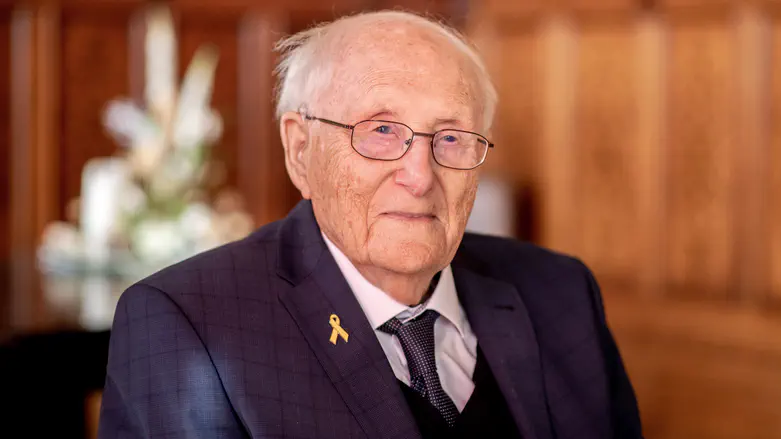
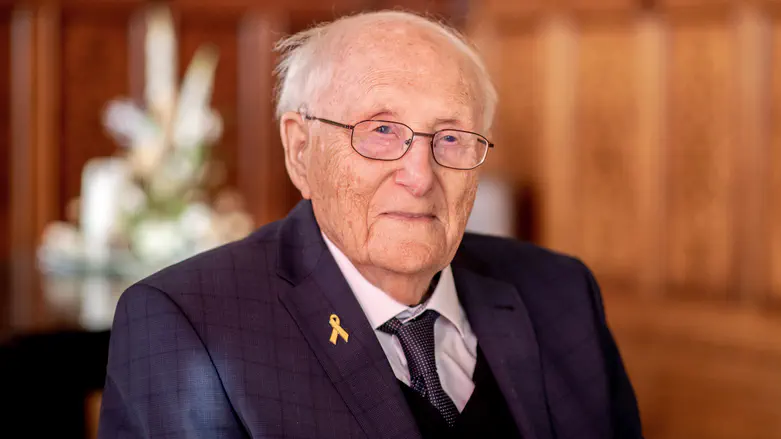
Albrecht Weinberg, a resilient survivor of multiple Nazi concentration and death camps who dedicated his final years to educating the youth of Germany, passed away on Tuesday at the age of 101, according to The Associated Press.
Authorities in the city of Leer confirmed his death, which occurred only weeks after the premiere of a documentary detailing his life and experiences during the Shoah.
Weinberg was born in Rhauderfehn on March 7, 1925. During the Holocaust, he endured the horrors of Auschwitz, Mittelbau-Dora, and Bergen-Belsen. He also survived three brutal death marches toward the end of the Second World War. Most of his family members were murdered by the Nazi regime.
After spending decades in New York, Weinberg returned to his home region of East Frisia 14 years ago. Despite his advanced age, he traveled extensively to schools to warn against the dangers of historical amnesia.
For Weinberg, the past was never truly behind him. Speaking last year, he described the ongoing psychological toll of his survival, noting that the memories remained vivid.
“I sleep with it, I wake up with it, I sweat, I have nightmares; that is my present,” he said.
The survivor expressed deep concern regarding the preservation of Holocaust history once the final eyewitnesses have passed. He emphasized that future generations would lack the direct connection to the tragedy that personal testimony provides.
“When my generation is not in this world anymore, when we disappear from the world, then the next generation can only read it out of the book,” Weinberg warned.
Although he was awarded Germany’s Order of Merit in 2017, Weinberg famously returned the honor last year. The gesture was a protest against a parliamentary vote regarding migration policies which passed with the support of a far-right party.
Israel’s Ambassador to Germany, Ron Prosor, honored Weinberg’s memory in a statement on social media. He described the centenarian as a vital link between the horrors of the 20th century and the hopes of the 21st.
Ambassador Prosor called Weinberg “a bridge – between past and present, between pain and hope, between the dead he could never forget and the young people whom he encouraged to seek the truth.”
Source link