Rabbi Zev Shandalov is an author, teacher and local rabbi in Maale Adumim
Torah MiTzion, whose 30th year celebration will take place after Sukkot, stands in the forefront of the battle for the future of the Jewish people in the Diaspora, offering religious-Zionist Torah scholarship to Jewish communities throughout the world and strengthening the bond between the Jewish people in the Diaspora and in Israel via the study of Torah.
Once again, we find ourselves celebrating the joyous holiday of Sukkot. While all of our chagim are filled with symbolism, Sukkot seems to be infused with the most of all. While we are commanded to be happy on all of our holidays, we are commanded to be exceedingly happy on Sukkot.
What is this joy all about, and what is there hidden in some of the symbolism of the acts that we do?
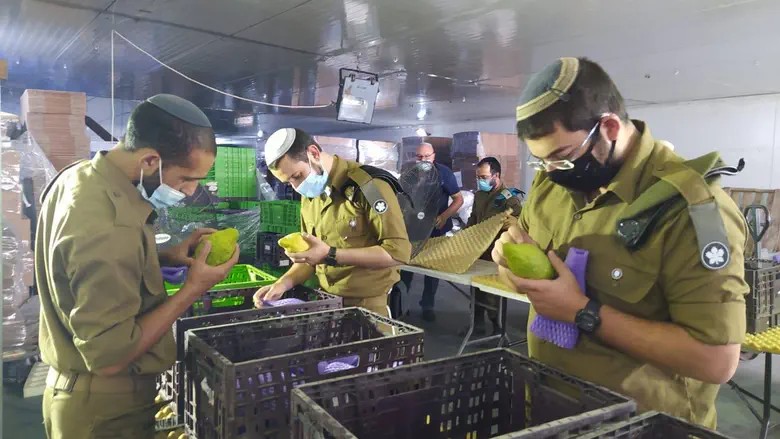
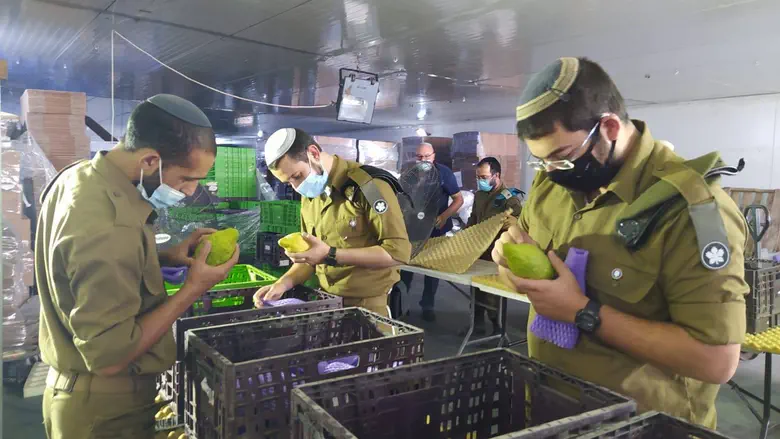
I want to focus on one aspect of Sukkot: The Arba Minim – the Four Species of items that we bind together on a daily basis (except on Shabbat). Much ink has been spilled on the symbolism of all four of the items that we combine together: For example, they can represent various types of Jews and how we “unify” them. They can represent various parts of our body, which symbolically we show we want all of our selves to serve Hashem.
But there is one item – the Etrog – that has a specific rule in Halakha that the other species do not have. And that Halacha actually gives us an even deeper insight into what the Chag is all about.
The Halakha says that the Etrog must be שלם or complete. It may not be missing even the smallest amount. It must be a close to perfect as possible. The obvious question is: WHY? Why specifically that item of the four needs that level of perfection?
Let us first explore what else in our lives we strive for to be perfect.
-When someone is sick, we pray for them. We do not want them to feel just a little better! We want them to have a complete recovery. We call that in Hebrew רפואה שלמה.
-When a person speaks about faith in Hashem, we do not strive for a little faith, or just improved faith. Rather we strive for total faith in Hashem. That is known as אמונה שלמה.
-When we look at a Torah, we believe that it is all from Hashem. If even one letter is missing, then that Torah is disqualified from being read from publicly. That is what we refer to (on one level) as תורה שלמה.
And finally, when we pray for the coming of Mashiach and the ultimate Redemption, we are not satisfied with a “little” redemption! We want a complete redemption. That is known as גאולה שלמה.
If we re-order these items in Hebrew, we see the list looks like this:
אמונה שלמה
תורה שלמה
רפואה שלמה
גאולה שלמה
The initial letters of these words spell out א-ת-ר-ג
Yes! Our etrog is symbolic of all of those things we strive for in life that are to be as complete and and whole as possible. So, taking an etrog that is “incomplete” would signify our resgination to these other items as being ok even if incomplete.
And that idea, as well, brings us a greater level of joy perhaps than other holidays. We weave in to our observance of the Four Species an even greater hope and desire: all of these things that we strive for to be “perfect” are included in the beautiful etrog.
May the coming year of 5787 bring forth the beauty of the etrog and the true fulfillment of all of our wishes, prayers and hopes.
Shana Tova!
Source link