

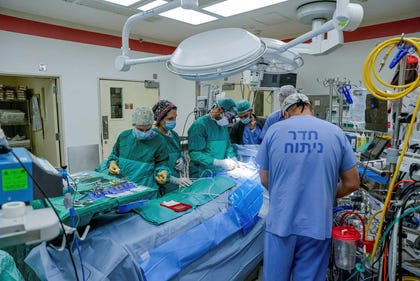
A private hospital in northern Tel Aviv was shut down on Monday after a surprise inspection uncovered serious deficiencies, a statement by the Health Ministry said.
Medical operations at the Medica private hospital were suspended after inspectors found that staff were performing procedures beyond the scope of their professional qualifications and posing an immediate risk to patients, the Health Ministry said.
According to the ministry, additional grave deficiencies included the facility’s work processes and staff’s ongoing violations of mandatory regulations.
The management of the Medica network, its owners and board of directors will be summoned to a hearing at the Health Ministry. It is also considering taking personal measures against staff members who performed medical procedures beyond the scope of their professional authority.
The latest findings follow serious deficiencies uncovered during a surprise inspection last July at another Medica private clinic in Tel Aviv called Medica Raphael.
Following those findings, the ministry ordered the immediate suspension of operations in the facility’s operating rooms. According to the ministry, activity at Medica Raphael is being resumed gradually.
“Thousands of surgeries are performed every month at Medica Tel Aviv by some of Israel’s leading physicians, and we operate according to the highest medical and safety standards,” a statement by the Medica private hospital said.
“The Health Ministry made a sweeping decision based on random findings. We will respond to the Health Ministry through the appropriate channels,” the statement added.
Israel’s health care system comprises public, semi-public and private providers, with the latter growing considerably in recent years.
The state-financed health maintenance organizations (kupot holim) operate most primary and family medicine clinics, either directly or through contracts with privately operated clinics.
However, a report published in 2023 found that more than one million Israelis – 12 percent of the entire population – have had to forgo medical services in 2021 or 2022 because they couldn’t afford the copayments.
Moreover, 35 percent of Israelis said they gave up on doing medical tests or treatments through the health maintenance organizations because of the long wait times. Of these, 51 percent then turned to more expensive private clinics.
As a result, Israel’s private health care sector has expanded significantly in recent years. One important driver has been the growth of voluntary health insurance, which can provide access to private providers, a wider choice of physicians and faster access to some services.
An OECD report from 2023 noted that more than 80 percent of Israelis now have some form of voluntary health insurance, making Israel one of the countries with the highest rates of supplementary health-insurance coverage.