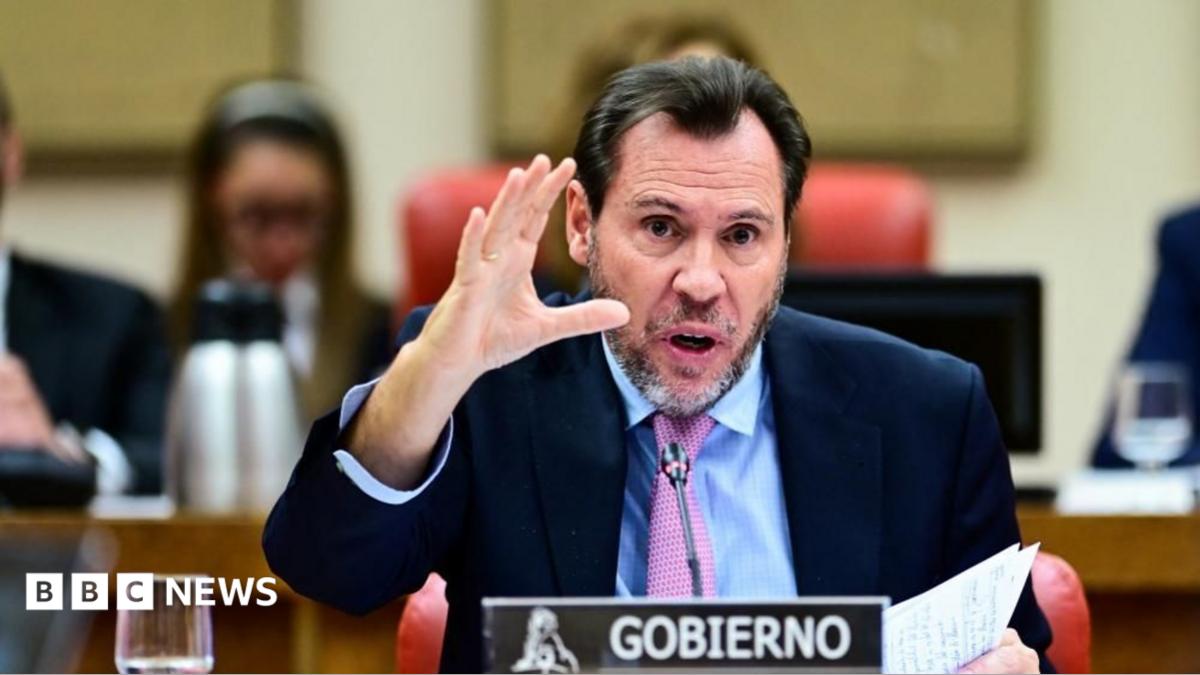
Puente announced his decision at the end of a lengthy congressional session on Tuesday evening in which he had outlined new rail safety measures and had been grilled by the opposition.
He also said: “I am not only stepping down from my position as minister of transport, but… I am also withdrawing my name from the lists for the early legislative elections.”
Puente’s position immediately came under scrutiny after the 28 October crash.
The main opposition, the conservative People’s Party (PP) and the far-right Vox, were both calling for his resignation – as were some of the government’s allies.
They argued that the minister should take responsibility for a high-speed rail system that many Spaniards now regard as unsafe and whose credibility even Socialist Prime Minister Pedro Sánchez admitted was “broken”.
The opposition also criticised Puente for appearing to blame human error for the crash, claiming the minister was trying to deflect the blame from his own failings.
But, having said he was going to remain in his post just a few days ago, his resignation appears to have taken many by surprise.
The rail accident and Puente’s decision have come at a crucial moment in the Spanish political calendar, with early general elections on 29 November.
Many observers see the accident as a massive electoral setback to the Socialist-led government that will make it impossible for Sánchez to defy the polls and win the election.
Puente’s predicament presented him and the prime minister with a dilemma – refusing to resign might look insensitive in the wake of the accident and stepping down could look like acknowledging he and the government were at fault.
In the end, Puente opted for the second option, insisting his decision had been driven by “political dignity”.
The prime minister praised his colleague who had “faced up to the situation, provided answers and solutions, and then stepped aside”.
“Out of dignity. Of his own accord. Out of respect for the victims,” Sánchez added.
Many Spaniards will now ask whether Puente’s successors will manage to restore faith in the country’s railway system.
Source link