
I asked a machine this week (the AI) what humility is.
It gave a perfect answer. It cited Maimonides, drew the line between humility and self-abasement, and added an example. Not one word was wrong.
And there is not a drop of humility in it. No pride either. There is no one there.
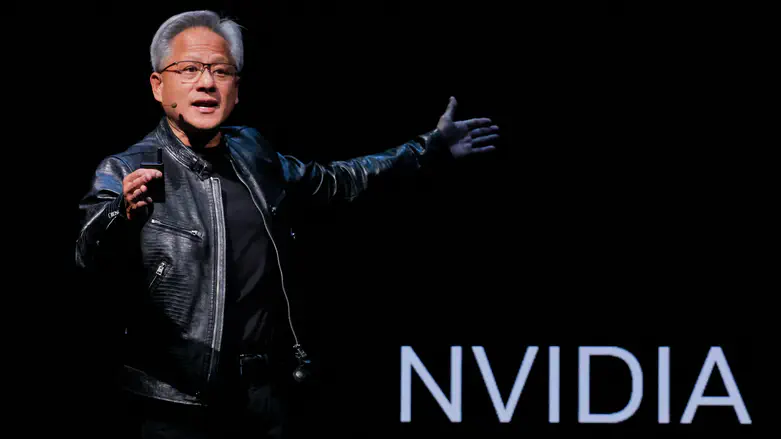
That machine runs on the chips of one company. This month we learned something about the man who built it.
Eleven Days
Twenty-two dollars and seventy-three cents.
That was the price of one sin on the morning of Thursday, November 12. Nvidia’s stock fell overnight from $173.73 to $151. The man who had led the company for thirty-three years resigned, four days after admitting in a letter to his employees that he had not been faithful to his wife.
The market knows how to price everything. Betrayal too.
Eleven days later, by unanimous vote, Jensen Huang was back in his chair.
The West has a word for this: repentance. It comes from Latin, from a root of regret and penalty. You were sorry, you paid, the account is closed. And the man did pay. The humiliation was public, and the cost was real.
But notice who closed the account: a board of directors, citing the interests of stockholders, employees, partners, and customers. I do not know what is in the man’s heart, and it is not my business. My business is the structure. An entire system ruled that eleven days is enough, and that humility is a word you put in a press release.
Teshuvah is something else. The word means return. Maimonides lists among its ways that the one who returns “changes his name, as if to say: I am another, I am not the man who did those things… and goes into exile from his place, for exile atones, because it brings him to submit and to become humble and lowly of spirit.” The measure is not how much you paid. The measure is whether another person was born.
The Man and the Book
The logic of the price was not born in Silicon Valley.
In Highgate Cemetery in London stands a giant bronze head of Karl Marx. Few read the names carved beneath it. One of them: Helene Demuth. She kept the family’s house for decades, without wages. In 1851, she gave birth to a son. Most historians hold that the father was Marx. The child was handed to a foster family; Engels took the paternity on himself, and Marx went back to his desk to write about the exploitation of one person’s labor by another.
Rousseau too. He taught all of Europe how to raise a child, and handed his own five children to a foundling home. Paul Johnson filled a whole book with such cases: intellectuals.
The astonishing part is not the behavior. It is that no one saw it as a question raised against the teaching.
And yet the West, at its root, knew there was a link. Socrates taught that virtue is knowledge: whoever knows the good will do it. Then came Marx and Rousseau, who knew and did not do, and the formula broke. The conclusion drawn: knowing and doing are two separate matters. Judge the book, leave the man alone.
In the wisdom of nature, this even works. A chip does not check the fidelity of the person who designed it. And the machine that runs on it is the end of the road: a book with no man at all.
Whoever Did Not Do, Did Not Know
The Sages of Israel read the same fact in the opposite direction. “Whoever says he has nothing but Torah, does not have even Torah” (Talmud, Yevamot 109b). From where? From the verse: “You shall learn them and keep them, to do them” (וּלְמַדְתֶּם אֹתָם וּשְׁמַרְתֶּם לַעֲשֹׂתָם, Deuteronomy 5:1). Whoever is not in the doing is not in the learning. For the Greek, the deed is a result of knowing. For the Hebrew, it is a condition of knowing.
The word itself says so. In the language of the Hebrew Bible, a chacham, a wise person, is not one who knows wisdom but one who conducts himself by it. That is why, Rabbi Naftali Herz Wessely observed, angels are never called wise. Neither are machines. And the Book of Proverbs opens in a single breath: “to know wisdom and moral discipline” (לָדַעַת חָכְמָה וּמוּסָר, Proverbs 1:2).
Which wisdom? Not the kind a person draws out of himself, from observation and the laboratory. The wisdom given by Hashem, the World Creator: the Torah, as read by the prophets and by their students, the Sages of Israel. “The prophetic spirit,” writes Rabbi David Cohen, the Nazir, “is the beginning of Israel’s wisdom.”
Rav Kook opens his Orot HaKodesh with this. The wisdom of holiness, he writes, stands above every other wisdom in that it “transforms the will and the inner character of those who learn it.” The wisdoms of the world can portray lofty things and still leave the thinker exactly as he was. The logic is simple: what comes from the source of life carries the power to bring into being.
Intellect and will are two different vessels. The intellect knows, the will acts. In the wisdom of nature, you can hold one full and the other broken, and the chip will work. In holiness, they must stand aligned. Whoever learns the Creator’s Torah as the Creator’s, with good character and humility first, connects to the source of life and becomes a new being.
Maimonides said, “I am another.” Rav Kook said, “a new being.” The same measure, once for the one who returns and once for the one who learns.
Twenty Years, Not Eleven Days
This past Shabbat’s Torah portion, Vayishlach, tells of a man who returns. Jacob comes back to the land he fled and to the brother he fled from. Not after eleven days. After twenty years in exile. He opens with “I am too small for all the kindnesses” (קָטֹנְתִּי מִכֹּל הַחֲסָדִים, Genesis 32:11). He wrestles all night and walks away limping. And in the morning he has a new name: “No longer shall your name be called Jacob, but Israel” (לֹא יַעֲקֹב יֵאָמֵר עוֹד שִׁמְךָ כִּי אִם יִשְׂרָאֵל, Genesis 32:29).
Exile, humility, a new name. Exactly the signs Maimonides listed.
One more thing. Before meeting Esau, Jacob prepared himself, in the words of the Sages, for three things: a gift, prayer, and war. He prays, divides the camp, sends the gift, and readies for battle. Whoever only prays has nothing but Torah. Whoever only divides camps is managing a crisis. Jacob gives up neither. Spirit and hand, aligned.
Not Waiting
This is what is asked of Noahides as well. Not to sit and wait for the Messiah to come and repair.
At the start of this month, in Jerusalem, sixty Noahide leaders from twenty-two countries signed the Noahide Scroll. Four days before Huang’s letter. The Scroll is not a list of ideas to agree with. It is a commitment to act: people who took upon themselves not only to know the word of Hashem but to live by it, and to repair the world with their hands.
The world now arriving is being built by machines that know everything, and by people of immense natural wisdom. We ask of them whether the chip works, and what the stock is worth. Hebrew tradition asks: Who is the man?
The answer to that question will not come in a press release, and it will not come down from heaven. It is written in deeds.
Chaim Goldberg is CEO of the Noahide World Center in Jerusalem.
Source link