
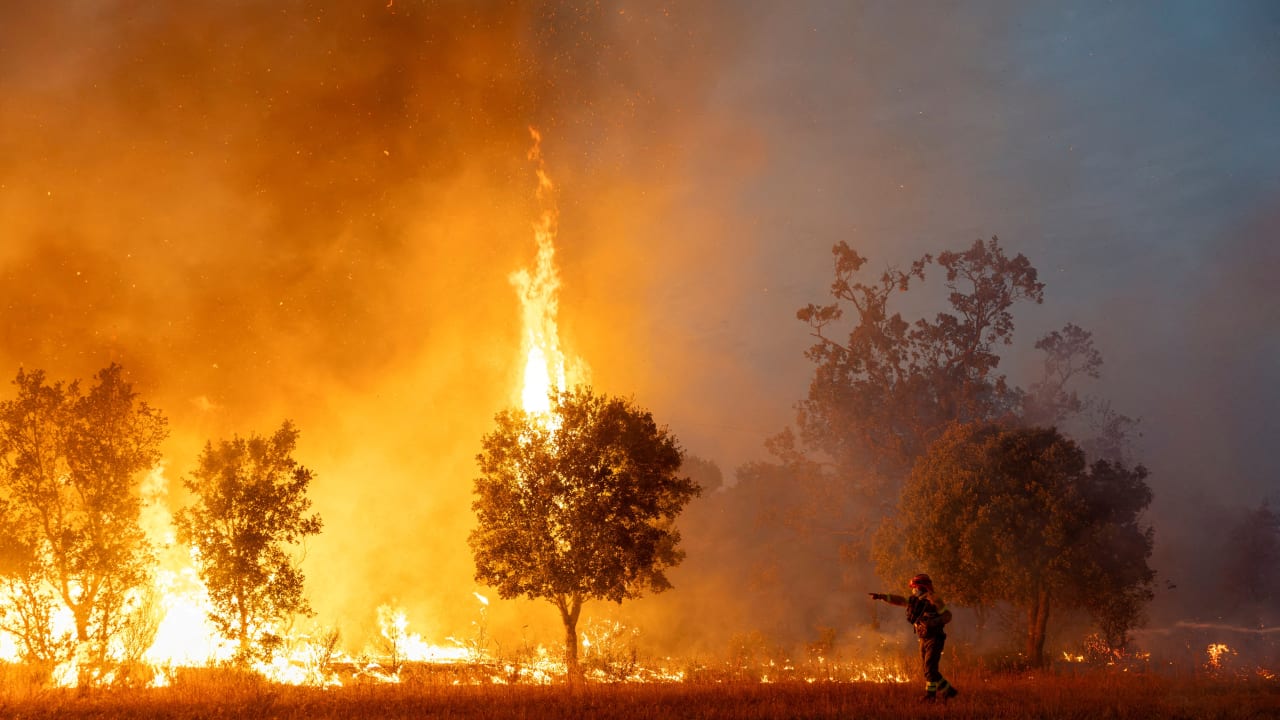
Cyberwell has alerted X/Twitter of a new wave of antisemitic conspiracy theories blaming Jews for wildfires across Europe, the NGO announced in a statement on Monday.
The organization, whose goal is to combat online antisemitism, identified “nearly identical narratives” regarding recent wildfires in Norway, France, and Spain, reinforcing what Cyberwell describes as a “recurring pattern of event-driven antisemitism, in which major crises are exploited to spread hate toward Jews.”
Posts in English, French, and Spanish claiming that Jewish people deliberately sparked the fires or orchestrated them for political or financial gain were identified by the organization’s analysts.
Cyberwell found that content on the Norway wildfires surpassed 2 million views on X, “helping transform an isolated conspiracy into a broader wave of antisemitic content,” according to the company.
Meanwhile, content on Spain’s wildfires reached more than 69,100 users, according to Cyberwell’s numbers.

Antisemitic theories emerge following major events, Cyberwell says
Antisemitic conspiracy theories also emerged following the Los Angeles wildfires in 2025 and the Patagonia wildfires earlier this year, the company said.
Other theories have emerged following the White House Correspondents’ Dinner shooting and the hantavirus outbreak.
“CyberWell found that bad actors and antisemites repeatedly inserted Jews into breaking news through familiar antisemitic tropes portraying them as secretly responsible for disasters or as profiting from human suffering,” said the statement.
“As false claims spread,” it explained, “posts increasingly incorporated dehumanizing language, calls to expel Jews and well-known antisemitic imagery, including the ‘Happy Merchant’ caricature.”
The “Happy Merchant” depicts a Jewish man with exaggerated stereotypical facial features greedily rubbing his hands together, and is popular among white supremacists, according to the Anti-Defamation League.
Cyberwell CEO and Founder Tal-Or Cohen Montemayor said that “the same scapegoating stories, once popular in Nazi propaganda during the Third Reich, now trend on every major social media platform after a crisis. Any major event can become a vehicle for blaming Jews online.”
“Whether the story involves a wildfire, a disease outbreak, a shooting, or another international crisis, we repeatedly see the same conspiracy theories emerge within hours,” explained Montemayor.
“The details change, but the underlying message does not: Jews are maliciously portrayed as secretly orchestrating disasters or profiting from human suffering. This pattern demonstrates how antisemitism continuously adapts to the news cycle while recycling centuries-old myths.”
The content, according to Cyberwell, is reflective of “antisemitic conspiracy frameworks recognized under the International Holocaust Remembrance Alliance (IHRA) Working Definition of Antisemitism, which include collective accusations against Jews and conspiratorial claims of hidden Jewish control.”