
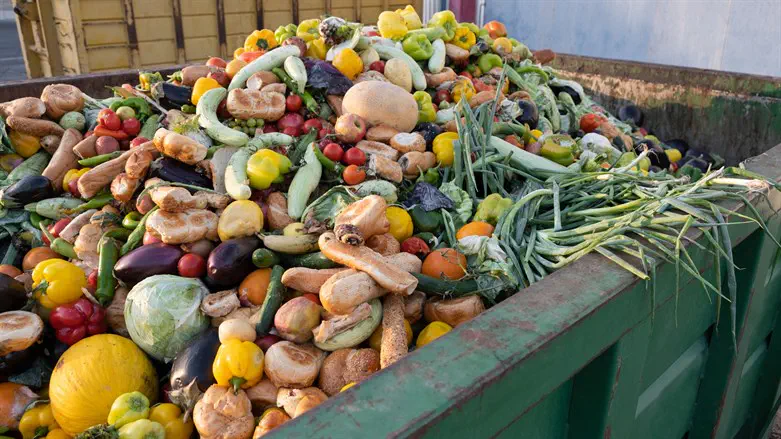
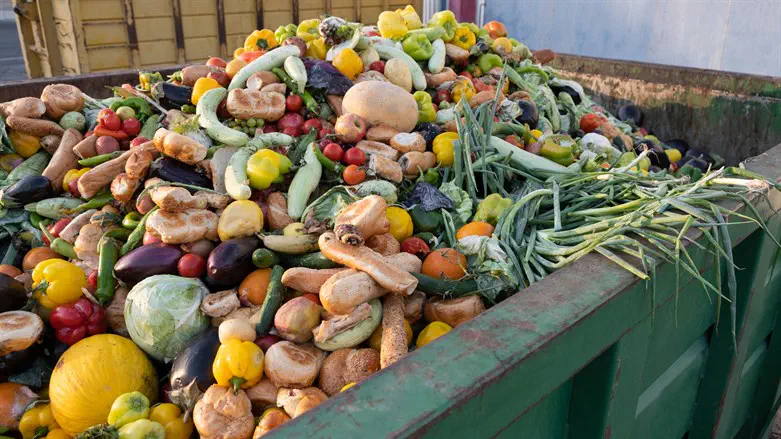
A ten-year report published today (Tuesday) reveals that in the past decade food with a total value of about NIS 211 billion was destroyed in Israel.
Despite a 13.3% decrease in per capita food loss, from 300 to 260 kg per year, the rise in the cost of living and demographic growth meant that the overall volume of loss remained particularly high.
According to the report, in 2024 alone some 2.6 million tons of food were discarded in Israel with an economic value of NIS 26.2 billion-about 39% of the food produced domestically, equivalent to 1.3% of GDP.
Loss in the household consumption segment alone is estimated at about NIS 10 billion-approximately NIS 10,785 per household per year. These figures are presented against a backdrop of roughly 1.5 million Israelis, about 485,000 households, living in conditions of food insecurity.
Alongside the economic cost, the report also presents heavy environmental and health consequences: food loss results in wasted water and land, pollutant emissions and waste treatment costs at an annual scale of about NIS 4.2 billion. It also states that the health cost of food insecurity stands at NIS 5.8 billion per year-about 4% of health expenditures.
Since the State Comptroller’s 2015 report that highlighted the absence of policy on the matter, substantial reforms have been promoted: the Food Rescue Law was updated, a national food security plan was written, and in 2025 a governmental program to reduce food loss was published for the first time by the Ministry of Environmental Protection and the Ministry of Agriculture.
Environment Minister Idit Silman said, “The food loss report presents a bleak picture that it is time to change. Food rescue is a fundamental step in building a sustainable food system. The ministry will continue to work to implement the plan through budgetary anchoring and interministerial and cross-sectoral cooperation.”
Gidi Karuch, CEO of Leket Israel, said, “NIS 211 billion of food was thrown away in a single decade. This is a national failure that has no justification. It is possible to rescue fit food, turn waste into a resource, and connect abundance to need.”
Dr. Moran Bleichfeld Magnezi from the Ministry of Health emphasized the health aspect, “Increasing consumption of fruits and vegetables among these populations can bring a significant improvement in their health. The Ministry is acting to reduce food waste also in public procurement and educational programs.”
Chen Herzog, BDO’s chief economist, noted, “Food loss on the scale of NIS 26 billion in the past year constitutes a severe blow to food security, the cost of living and the environment. The state budget for 2026 must be updated and include funding for a national food rescue program already this year.”
Source link