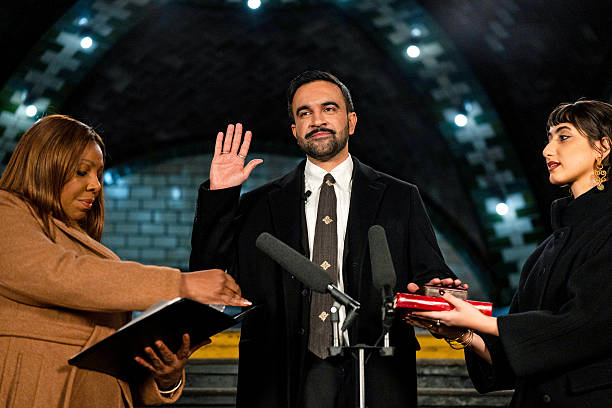
On the eve of Tisha B’Av, New York City Mayor Zohran Mamdani wished Jewish New Yorkers a “peaceful Tisha B’Av,” praised the “history and resiliency of the Jewish people,” and wished those observing “a safe and meaningful fast.”
On its face, those are kind words. Every expression of goodwill toward the Jewish community is welcome. But words matter only when they are backed by actions.
For months, since his candidacy, Mayor Mamdani has repeatedly accused Israel of committing “genocide,” labeled Prime Minister Benjamin Netanyahu a “war criminal,” declared that Netanyahu should be arrested if he came to New York, and even after admitting he has no legal authority to do so, continued urging the federal government to make it happened and encouraging New Yorkers to take to the streets and protest when Netanyahu comes to town.
Whether one supports or opposes Israel’s government, there is a profound difference between criticizing a country’s policies and repeatedly using the prestige of the mayor’s office to portray the world’s only Jewish state as uniquely criminal. That rhetoric does not exist in a vacuum. It fuels outrage, encourages increasingly hostile protests, and contributes to an atmosphere in which many Jewish New Yorkers already feel unsafe.
What makes this even more troubling is the selectivity.
Mayor Mamdani has made Benjamin Netanyahu the central focus of his moral campaign. Yet where are the repeated demands to arrest the leaders responsible for mass atrocities in Sudan? Where is the same sustained campaign against Vladimir Putin over Russia’s invasion of Ukraine? Where is the relentless public pressure directed at the leaders of Iran or terrorist organizations that have slaughtered civilians across the Middle East? Instead, his attention has been overwhelmingly focused on one leader: the prime minister of the world’s only Jewish state.

That selective outrage naturally raises questions. If human rights are truly the guiding principle, why is Israel treated differently from every other nation facing accusations of wrongdoing?
Jewish New Yorkers do not experience this rhetoric in the abstract. They experience it while synagogues hire armed security, Jewish students conceal their identities on campus, and Jewish neighborhoods become targets of angry demonstrations fueled by accusations that Israel is committing genocide. Public officials should understand that their words carry enormous weight, particularly during a time of unprecedented antisemitism.
Tisha B’Av is one of the saddest days on the Jewish calendar. It commemorates the destruction of both Temples in Jerusalem and centuries of persecution, exile, and tragedy that followed. It is a day of mourning, reflection, and remembrance.
Offering warm wishes on that day while spending months amplifying rhetoric that many Jews believe has contributed to hostility against their community is a contradiction that cannot simply be ignored.
If Mayor Mamdani genuinely wants to stand with New York’s Jewish community, the path is straightforward. Condemn antisemitism with the same intensity used to condemn Israel. Stop singling out the Jewish state while remaining comparatively silent about other conflicts and atrocities around the world. Recognize that language from the mayor’s office has consequences far beyond politics.
A Tisha B’Av greeting is easy to post. Building trust with New York’s Jewish community requires consistency. For many Jews, that consistency has yet to be demonstrated.
Stay informed with the latest Jewish news, real-time Jewish breaking news, and in-depth Israel news coverage from our newsroom. For continuing updates, expert perspectives, and trusted reporting, visit our main news hub here.
Israel and the Middle East –
Jewish Politics –
Jewish Culture and Lifestyle –
Videos –
Jewish World
Source link