
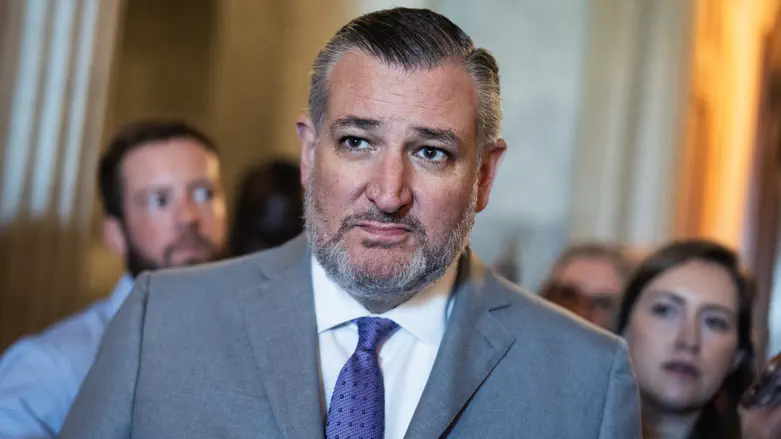
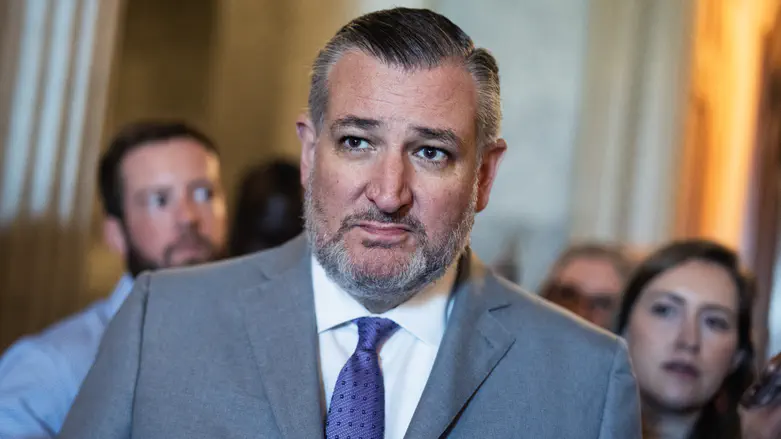
Half a year into the conflict between the United States and Iran, the Trump administration continues to pursue a diplomatic resolution. However, Texas Republican Senator Ted Cruz is calling for a sharp escalation of pressure on Tehran, advocating that Washington directly provide weapons to anti-government forces within Iran.
“I think our objective should be regime collapse,” Cruz stated during an appearance on the “School of War” podcast hosted by Aaron MacLean.
Cruz originally advocated for arming opposition demonstrators in late January following a brutal crackdown by Iranian authorities against widespread domestic protests that left at least 12,000 dead, according to sources cited by CBS News.
A month later, combined US and Israeli military forces initiated air operations targeting Iran. While the officially stated intent was degrading Tehran’s conventional military assets and atomic capabilities, President Donald Trump simultaneously urged ordinary Iranians to “take over your government” and remove the clerical regime that has governed the nation since 1979.
In the period since, relations between Washington and Tehran have swung between armed exchanges and diplomatic talks. A framework memorandum of understanding executed in June aimed to stop hostilities, reopen maritime lanes, resume nuclear discussions, and eventually ease sanctions collapsed last month. Nevertheless, recent Omani mediation regarding traffic through the Strait of Hormuz has created potential momentum toward resuming direct US-Iran discussions.
Cruz has repeatedly condemned executive branch diplomatic efforts. Speaking with MacLean, he described the June memorandum as a “disaster” and a “terrible deal,” arguing it would grant Tehran access to billions in sanctions relief and $300 billion in development funds while cementing “a permanent role with the Strait of Hormuz.”
“You’ll forgive me if I’m not terribly eager to give them $300 billion to facilitate their carrying out their stated intent of murdering us,” Cruz remarked.
“Giving them $300 billion is an exceptionally bad idea. It was a bad idea two months ago, it’s a bad idea today and it would be a bad idea two months from now. So I hope we don’t go down that road,” he added.
Administration officials noted in June that the $300 billion reconstruction package relied on voluntary contributions from Gulf allies and private enterprise rather than taxpayer funds.
Cruz contends that Washington should maintain military strikes on Iranian targets and continue to choke off state revenue streams through an active naval blockade of Iranian commercial harbors.
“What I believe we should do, what I have urged President Trump repeatedly, what I’ve urged Israel to do repeatedly, is arm the protesters, give them the guns, to let them overthrow their own government so that it’s not American boots on the ground, it’s Iranians fighting for their own country,” the senator said.
While Trump has pulled back in recent months from explicitly calling for government overthrow – and Cruz acknowledged that the term “regime change” carries negative associations linked to the post-2003 instability in Iraq – Cruz noted that he remains indifferent as to who leads a post-clerical Iran.
“I don’t particularly care who comes next,” Cruz said, adding, “I don’t have a dog whether it’s the son of the Shah, whether it is the [Mojahedin-e-Khalq opposition group], whether it is someone local, as long as they are not an Islamist who hates America and is actively trying to kill Americans.”
For his part, Trump indicated in March that he expected a voice in determining Iran’s future leadership while expressing skepticism regarding Crown Prince Pahlavi, remarking earlier this year that the prince “seems very nice,” but adding, “I don’t know how he’d play within his own country.”
Cruz’s stance reflects broader dissent among congressional Republicans regarding negotiation with Tehran. Following the June memorandum, Louisiana Senator Bill Cassidy labeled the framework “the worst foreign policy blunder in decades,” while Arkansas Senator Tom Cotton warned that key components represented a “step in the wrong direction.”
The debate highlights a growing ideological division within the Republican Party between traditional hawkish factions and non-interventionist wings. Vice President JD Vance – a key player in US-Iran negotiations and a long-time skeptic of foreign military actions – defended the White House’s diplomatic strategy during a recent appearance on Joe Rogan’s podcast while expressing frustration with foreign policy hawks.
“I’m very frustrated by the Americans and, frankly, by people in other countries who are like, ‘You cannot negotiate with the Iranians,'” Vance said.
“Well, then, what is your proposal to get people to stop shooting at ships in the Strait of Hormuz? You can bomb them, you can take away their radar, you can take away some of their drones and some of their missiles, but it’s just too easy to fire at ships in the strait. So you’ve got to actually be willing to talk and to try to figure out the problem.”
Addressing his overall philosophy, Cruz rejected labels from both ends of the foreign policy spectrum during his interview with MacLean.
“I disagree with both the interventionist and the isolationists. I think the interventionists are too quick to send the Marines. That’s their solution for everything,” he stated.
“But I am most definitely not an isolationist. It is a dangerous world, and it is our military’s job to prevent enemies of America from killing Americans.”
The remarks align with Cruz’s long-standing public posture regarding Tehran. In May, after the White House announced that the final terms of a proposed agreement were nearing release, the senator warned against allowing radical elements in Iran to retain nuclear capabilities.
“I am deeply concerned about what we are hearing about an Iran ‘deal,’ being pushed by some voices in the administration,” Cruz wrote at the time.
“President Trump’s decision to strike Iran was the most consequential decision of his second term. He was right to do so, and we achieved extraordinary military results-including destroying all of their missiles & drones and sinking their entire navy,” he added.
“If the result of all that is to be an Iranian regime-still run by Islamists who chant ‘death to America’-now receiving billions of dollars, being able to enrich uranium & develop nuclear weapons, and having effective control over the Strait of Hormuz, then that outcome would be a disastrous mistake,” warned Cruz.
Following the publication of the agreement text in June, Cruz reiterated his warning regarding executive branch strategy, telling The Hill, “History teaches that giving billions of dollars to theocratic lunatics who want to murder us is not a good idea. I think the president is receiving some very poor advice on this deal.”
(Arutz Sheva-Israel National News’ North American desk is keeping you updated until the start of Shabbat in New York. The time posted automatically on all Israel National News articles, however, is Israeli time.)
Source link