One after another, the trucks entered the base. The large company logos on them revealed their previous purpose: fresh meat, sausages, ice cream. Finally the food had arrived, someone said.
Others were less optimistic. Then the doors opened, and with them, the smell. Bodies. Piles of dead bodies, one on top of the other, and intertwined. This was the scene at the Sde Teiman army base in the south a few days after October 7.
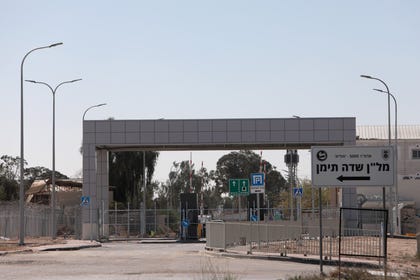
In those days, Sde Teiman was a mirror image of the Shura army base in central Israel. The bodies of soldiers and civilians were brought to Shura, while the bodies of people thought to be terrorists were brought to Sde Teiman. All told, about 1,600 bodies were found in Israel, and many more were found in the Gaza Strip near the border fence.
According to Naor Paz, a reservist, one time the body of a member of a community’s security squad was found. He had apparently taken the Kalashnikov off a dead terrorist and himself fell in battle.
At first, the dead Israeli was mistaken for a dead Hamas man. In another case, the body of an Israeli woman was found among bodies of Gazans removed from a vehicle that, on October 7, was hit by a combat helicopter while on its way back to the Strip.
On paper, the identification mission wasn’t complex: Unload the trucks, place their contents into refrigeration containers, and take a DNA sample from each body. The samples were sent to labs, where they were cross-referenced with state databases and personal items provided by the families of the missing. When a match was found, the body was removed from the refrigeration container and transferred to Shura.
But this dry description fails to capture the reality. When bodies were intertwined, it was often impossible to tell whose arm or leg it was. For DNA purposes, “we took teeth or a piece of a nail with a hammer and chisel,” Paz says. “If not much was left of him, we would take a piece of bone.”
And there were other challenges. “Some bodies were collected only after a few days, sometimes weeks, and were decomposing,” Paz says.
According to some soldiers, the chaos was also worsened by the performance of Zaka, the organization that recovers dead bodies. “The army evacuates every limb in a separate bag,” Paz says. “Zaka sees a hand, then a body, thinks they’re connected, and puts them in the same bag, as if they were putting together a puzzle.”
For example, one soldier recounts a case of intertwined hands. “Fingers really between fingers,” he says. “At first, they thought they belonged to the same person, but it turned out to be two different people.”
At the camp, it was hardly possible to avoid the dead. As Paz puts it, “We slept not far from the bodies; we even ate next to them. At first, I couldn’t eat anything. After a few days, I ate some carbs, but no meat – to this day, I still can’t.”
The smell was unbearable. “They gave us eucalyptus oil for the mask, but it didn’t help; everything penetrated,” Paz says. “When I got home, my wife asked me to throw away my clothes because of the smell. Even after I showered four times, she still smelled the stench. It stuck to my skin. To this day, I shower three times a day because I think I still have clotted blood on my hands.”
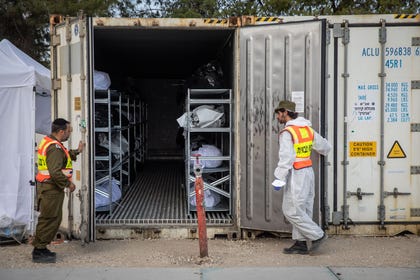
Not only the smell was seared into him. “We put a body bag into one of the containers, and suddenly a head fell out, right next to me,” Paz says. “I had to pick it up with my hands and put it back in.”
He managed to cope with the sights, smells and everything else. Or so he thought. After all, he had prepared for this moment for years in a special department at Home Front Command.
Then came September 2025 and a phone call from his commander. It was a conference call; he saw his friends on the screen, all but one. “Israel killed himself,” the commander said. There were 12 soldiers in the department; now there were 11.
Israel Amar was a 34-year-old ultra-Orthodox man from Beit Shemesh near Jerusalem, married and a father of three. He volunteered for reserve duty again and again. One day, while on leave at home, he left with his rifle for a public park, where he took his own life.
A month before Amar killed himself, he had been sent for a psychiatric evaluation. The diagnosis: “no evidence of suicidality.”
In the days after Amar’s funeral, Paz’s condition worsened. That was the trigger for everything, he realizes now. He didn’t go to work and was always drinking alcohol. Then came a fit of rage. “I broke half the house,” he says. Memories flooded his mind; the wall of suppression broke.
Breaking point
Alon Elharar suffered a similar experience. “We found two spines, and next to them we saw Hebrew letters,” he says. “After another look, we realized it was the emblem of a school shirt.”
A few days later, the identification came through – an Israeli adult and child who had been burned alive, among many bodies of Palestinians. Two officers in the Southern Command confirmed the details to Haaretz.
“I was a young father, and that was everything to me,” says Elharar, who is married with two children. “To see such annihilation and death in the most personal context possible; it hit me hard. It was a breaking point.”
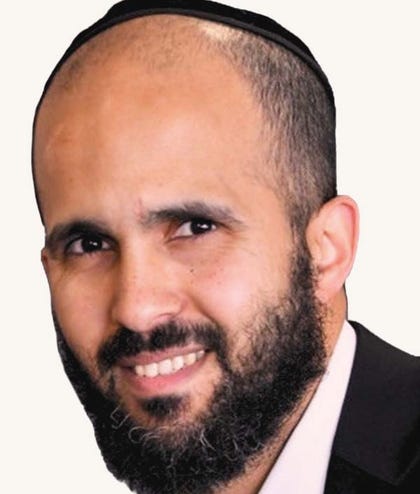
Elharar, who is from Jerusalem, wasn’t even supposed to be there. In his role in the reserves, he’s responsible for training soldiers in body identification. His job is only to instruct them.
But in the first days of the war, when he heard about a shortage of soldiers at Sde Teiman, he volunteered. “I thought it was an incredibly important mission – to find people who didn’t deserve to be there,” he says.
After a little over a week, the soldiers had completed checks on all the bodies that had been brought to Sde Teiman. But two months later, the soldiers were called back to the base. “In the first round, there was chaos, a mess,” Paz says. “DNA was lost along the way, there were clerical errors, so they wanted us to do everything again.”
There was also a lack of information on several people classified as missing. “For some, nothing was known about them; we didn’t even know if they had been murdered or abducted, so we looked for answers among the bodies.”
Paz says the soldiers built profiles of the missing, listing identifying marks like tattoos or dreadlocks. “We had to tear the shirts off the bodies and take everything out of the pockets, because some [Gazans] had stolen things from Israelis. We found necklaces, wallets, maps of kibbutzim, soldiers’ IDs,” he says. And there were also weapons: grenades, magazines and explosives.
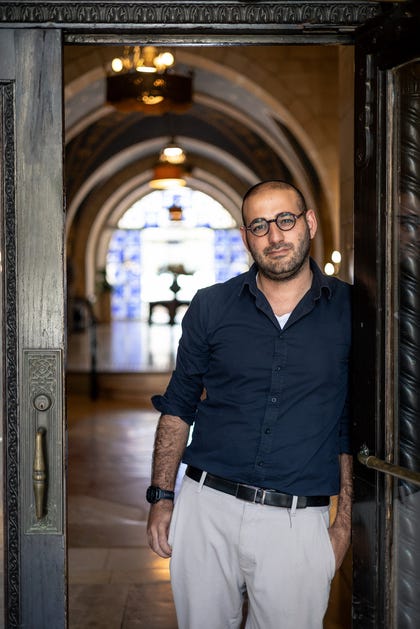
“The bodies were frozen, so we had to thaw them,” he says. “Some were decomposing; there were maggots everywhere, and limbs were missing. In some, facial features were visible; in others, not.”
According to Paz, in the second round, remains of two Israeli civilians and two foreign nationals were found: an agricultural worker from Thailand and an asylum seeker from Eritrea. There would be several more rounds; in some, more advanced equipment was used to scan the bodies. A special unit at Southern Command was responsible for extracting remains from burned vehicles.
“They used special vacuums,” one officer says. “The ash was taken for DNA tests. Several mysteries were solved that way. Israelis, that’s all that was left of them: a little ash.”
It’s unclear how many of the bodies brought to Sde Teiman turned out to be Israelis. Some say 14, others 16, some even 30. One reason is that some rabbinical personnel only count the bodies of Jews.
Then there were the bodies of five Gazan workers who were in Israel on October 7 and were murdered by Hamas. The IDF Spokesperson’s Unit was unable to answer questions on this matter.
Continuing to search
Elharar remembers the day he realized that something in him had changed. It happened after a year of continuous reserve duty. “I realized I wasn’t okay,” he recalls. “I became short-tempered at home with my wife, with the children. I felt that something in my basic human experience had been undermined.”
He thinks about death. “I can be sitting on a bus, and it hits me, severs me from my surroundings. Thoughts about what would happen if one of my children died – what would his funeral be like? And how would I hold him? These are thoughts I didn’t have before. Death is very present in life. In every joyful moment, I think about the inevitable end.”
Today, Elharar is being examined by the Defense Ministry’s Rehabilitation Department, but for the time being, he’s back in reserve duty. “To tell the truth, I think it’s a bit of an escape,” he says.
For Paz, the diagnosis is clear: a 40 percent disability rating for post-traumatic stress disorder – for only five years. This is the Rehabilitation Department’s new policy, to reduce recognition of permanent PTSD.
“I received the results and felt anger, frustration,” he says. “I gave my all so that families would have a grave to visit, and this is what I get in return.”
As he puts it, “I’ve been to so many psychiatrists, and all of them wrote that my condition is severe, that I can’t be rehabilitated. My psychologist told me that it’s a miracle I’m still alive. My disability isn’t temporary, it lives with me every day. I can’t go to the supermarket, I barely eat. I can’t be in crowded places, I isolate myself, I lash out at the children, I don’t recognize myself anymore.”
Paz’s wife gave birth while he was on reserve duty. “She called me to come, and I got there half an hour before the birth,” he says. “When I saw the baby, I couldn’t feel anything. Nothing. There was no joy, zero emotion, I was disconnected. It took me four months until I agreed to hold him; I waited for him to grow. At first, he felt like another body part.”
It’s a feeling of emptiness, Paz says. “I haven’t cried in two years; there’s no emotion. I’m numb, nothing makes me happy. I can start washing dishes, and my mind goes elsewhere. The water can run for hours. My wife went down to part-time work because she knew I couldn’t function with the children.”
Even today, Paz is obsessed with people’s identifying marks. “I look at people passing by and focus on their hair color, their tattoos. I don’t see people, only marks.”
And his nights are haunted. “I sleep about three hours a night,” he says. “I go to sleep at 2 and wake up at 5.” In that short span, he has nightmares – from his days in Gaza as well as at Sde Teiman. After the mission at the base, he volunteered to accompany an armored force in an attempt to locate hostages in the Nuseirat refugee camp. But something went wrong.
“We were inside a building, and there was a tremendous noise,” he says. “Somebody from the observation post shouted, ‘Terrorist, terrorist.’ Then an anti-tank missile was fired at our area, hitting right nearby.” The tanks “started firing at the terrorist. A few days later, I came home and decided I wasn’t going back.”
The nightmares sometimes make him violent in his sleep. “I once lashed out at my wife,” Paz says. “For two and a half months, I slept on the couch because I was afraid of hurting her.”
He recently checked himself into a mental health facility for three months. “I do everything they tell me, but I don’t feel any improvement,” he says. “I’ve lost a part of my soul; I wish something would help.”
The skeletons around him
Some veterans take even more drastic steps. For six months, Shlomo Arnon has been living in a locked ward at a psychiatric hospital. “I have no expected release date,” the 29-year-old says in a video call.
He was at both Shura and Sde Teiman; he served hundreds of days in reserve duty. He was diagnosed with PTSD and recognized with a 70 percent permanent disability. In the eyes of many professionals, he’s one of the war’s most severely mentally wounded.
“I saw countless faces of dead people,” he says. “One was swollen like a balloon, one was black, another red, one had no face left at all. They all come back to me in flashbacks, in nightmares. At night I scream, I scream my soul out.”
It isn’t much better when he’s awake. “I suffer from fits of rage, breaking everything around me. I’m on tranquilizers and painkillers. I have a hard time taking a shower because I still feel like I’m washing a body,” he says. “Because I had so many attacks and so many tremors, I would bang my head against the wall out of frustration, and that damaged my memory.”
Arnon, who is from Jerusalem, is married and a father of three. Before the war, he worked in archaeological excavations. Now, in his dreams, he digs in the earth and discovers dead people.
“I lost everything,” he says. “My youngest daughter doesn’t know me; the middle one calls me Shlomo, not Dad. I’m disconnected from my family, from my friends. At first, they came to visit, but after that, I became one of the crazies.”
In the ward, he sees skeletons, but living ones, people who look like bags of bones. “When they show pictures of themselves from two or three years ago, you see gorillas, human beings,” he says. “This war has broken so many people, crushed them.”
At least 13 other soldiers who served in body identification at Sde Teiman have been hospitalized in locked wards at psychiatric hospitals, sources at the Rehabilitation Department say.
“There were cases where people were completely burned, nothing left of them. I would pick up the last remnant with two fingers,” Arnon says.
“There were cases where I would open the bag and see that the whole body was gone, only a few bones remained. There were maggots everywhere. Blood dripping. I found myself walking with a human hand, moving it from place to place.”
One time, he tried to pull a body out of a truck. “But I didn’t have the strength anymore; it was heavy, so I fell inside,” he says. “I was entirely covered in bodies, in blood. It was a moment I said aloud to God, ‘Take me, free me from this life.'”
But he stuck to the mission, striving to maintain his humanity. “It was important to me to respect everybody,” he says. “Some people wanted to desecrate the bodies of the terrorists. There was a lot of anger; it created a lot of tension among the guys.
“But I didn’t allow it, despite everything they did. … I covered them, I tried as much as possible to act with respect. For me, we’re all human beings – Jews, Muslims and Christians.”
Arnon’s condition is severe, but he’s not despairing. “I’m not looking for peace; I’m looking for healing. I believe that it will be good; I hope that with all my heart,” he says.
“Maybe I’m completely messed up, but it was for a sacred purpose, for the bereaved families, for the fallen, the victims. I gave my soul for them, and with a full heart. I’d do it again.”