
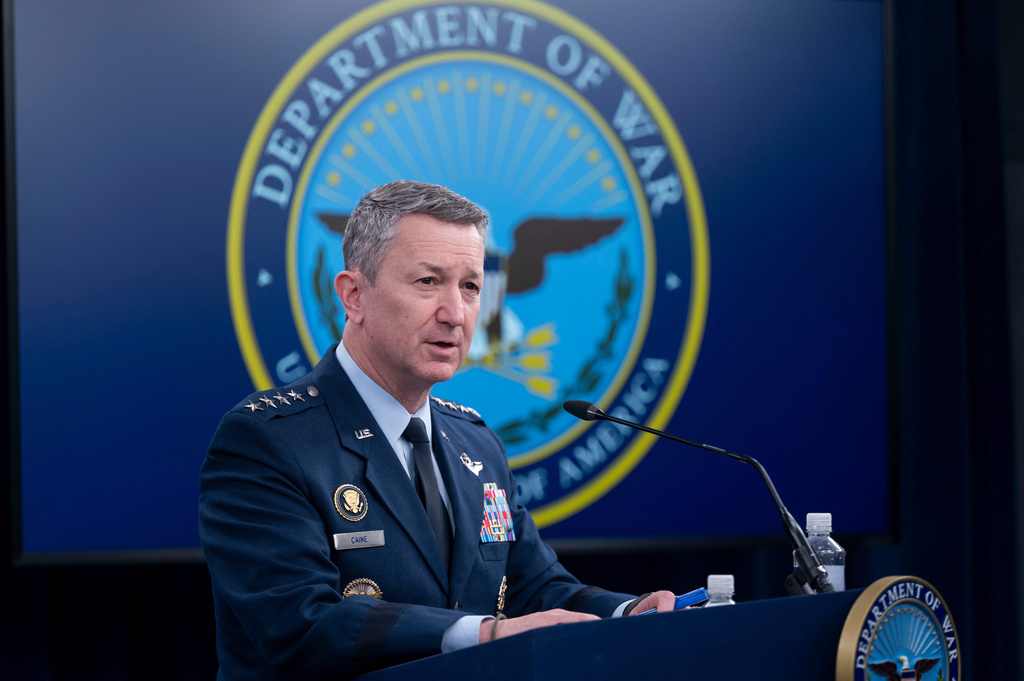
Chairman of the Joint Chiefs of Staff Gen. Dan Caine has been privately urging President Donald Trump and senior administration officials to find an “off-ramp” from the war with Iran, arguing that the military options available to the United States are limited and that airpower alone is unlikely to achieve Trump’s stated objectives, CNN reports.
“Caine is looking for an off ramp,” one source familiar with the matter said. Caine has discussed concerns about the military options for escalating the conflict and raised the prospect of finding an off-ramp with other key Cabinet officials, including CIA Director John Ratcliffe, Secretary of State Marco Rubio and Vice President JD Vance.
Caine has recently met with some of those officials in an effort to facilitate interagency coordination and ensure they are on the same page ahead of meetings with the president. His goal has been to make clear the limitations and potential pitfalls of the available military options, including those that do not involve putting U.S. troops on the ground.
“I think it is just his way of protecting the military,” one source familiar with Caine’s discussions with other top national security officials said, referring to his approach to the Iran war.
Trump has consistently appeared averse to deploying ground troops in Iran, instead signaling that he believes an air-bombing campaign can force Tehran to accept a deal on his terms. Caine and others in Trump’s Cabinet privately view that outcome as unlikely and have sought to develop alternatives that fit within the president’s own parameters, according to multiple sources familiar with the discussions.
Privately, Caine has become increasingly direct about the limits of airpower, reiterating his view that bombing alone is unlikely to achieve Trump’s stated objectives at this stage of the war. He has also become more vocal about the potential second- and third-order consequences of further U.S. escalation.
During consideration of a larger operation, Caine and other Trump officials focused heavily on what could go wrong if the United States escalated, including the possibility that Iran could retaliate against U.S. forces and other targets throughout the region.
Trump ultimately backed away from that operation after speaking with Middle East allies who told him they feared Iranian retaliation, particularly against their energy infrastructure. The president instead ordered a smaller operation targeting Iranian infrastructure.
Caine has also repeatedly raised concerns about dwindling U.S. munitions stockpiles. He raised the issue during at least two recent meetings with Trump in which possible options for escalating the conflict were discussed.
Those warnings predate the war. Before the conflict began, Caine and other military leaders similarly cautioned Trump that a prolonged military campaign could significantly affect U.S. weapons stockpiles, particularly weapons also needed to support Israel and Ukraine.
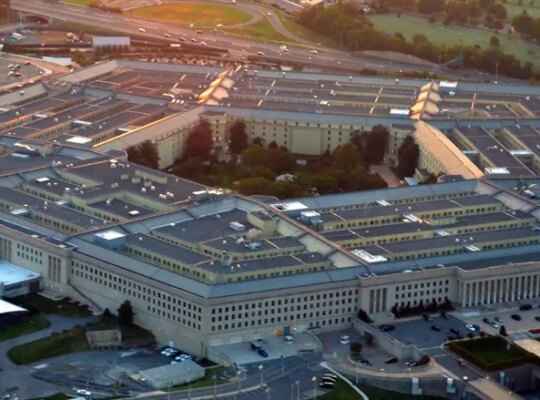
The munitions shortage is one reason the Pentagon and U.S. Central Command have recently begun reevaluating U.S. military strategy toward Iran. A senior military official at CENTCOM recently sent out a crowdsourcing email seeking new, creative and unconventional ways to pressure and punish Iran.
Caine has nevertheless made clear that the military remains capable of carrying out further operations if ordered. As chairman of the Joint Chiefs, he is responsible for drafting military options for striking Iran, and even before the war he was vocal about the potential downsides of launching a major operation, including concerns over its scale, complexity and the possibility of U.S. casualties.
At the same time, many within the administration and outside analysts believe the only way to decisively defeat Iran would be through a major operation involving ground troops, potentially costing American lives. The Pentagon considers all scenarios, so plans for such an operation exist, but no one in the administration is currently advocating such drastic action.
The focus has therefore increasingly turned toward finding an off-ramp that could give Trump at least a “symbolic” victory while preserving the possibility of a diplomatic breakthrough. That could begin with an agreement to reopen the Strait of Hormuz.
Caine’s spokesman, Joseph Holstead, declined to discuss the chairman’s private conversations, saying: “We do not discuss the Chairman’s confidential conversations with the President, the Secretary, or other senior leaders, nor do we comment on anonymous, agenda-driven characterizations of those conversations by sources who were not privy to them.”
(YWN World Headquarters – NYC)