
By Blake Brittain
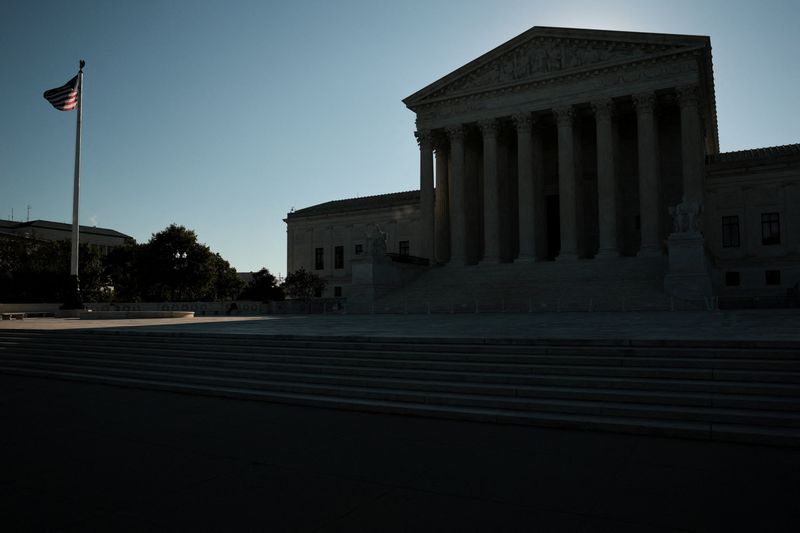
WASHINGTON, June 15 (Reuters) – The U.S. Supreme Court turned away on Monday a bid by India-based Tata Consultancy Services to overturn a $168 million award won against it by DXC Technology for allegedly stealing trade secrets related to life-insurance software.
Tata had appealed after a lower court upheld a judge’s decision to set the award at $56 million in compensatory damages and $112 million in punitive damages to Ashburn, Virginia-based DXC. Tata had argued that the damages award could not be justified under U.S. law regarding trade secrets.
DXC’s predecessor Computer Sciences Corp, or CSC, licensed its software to insurance company Transamerica in the 1990s. Its 2019 lawsuit, filed in Dallas federal court, said that Tata hired 2,200 Transamerica employees and used their access to CSC’s software and knowledge of its proprietary information to build a competing life-insurance platform.
Tata denied the allegations, told the court that the information at issue was not secret and argued that it accessed the software legally.
A jury in 2023 decided in an advisory verdict – a nonbinding decision given to a judge – that Tata should pay DXC $210 million for willfully stealing its trade secrets. U.S. District Judge Brantley Starr reduced the proposed damages award to $168 million in 2024. The New Orleans-based 5th U.S. Circuit Court of Appeals upheld Starr’s decision in 2025.
U.S. law concerning trade secrets allows for monetary damages to address both a plaintiff’s losses from the theft of trade secrets and a defendant’s “unjust enrichment” from it. The award to DXC was based entirely on unjust enrichment.
Tata told the Supreme Court in a filing that DXC should not have won unjust enrichment damages without proving it suffered actual losses as well. Tata also argued that the punitive damages award was excessive.
DXC responded that “nothing about the court of appeals’ fact-bound application of settled law warrants further review.”
(Reporting by Blake Brittain; Editing by Will Dunham)
Source link