
The modern obsession with quick-fix weight loss, miracle drugs, and the pursuit of a hyper-disciplined physique feels uniquely modern. Yet, two thousand years before the advent of semaglutide injections, the elite of ancient Rome were already trapped in a remarkably similar and often lethal cycle of extreme dieting and purging.
The weight of virtue
For the Roman elite, the body functioned pretty much like a public résumé. Physical appearance was inseparable from civic virtue, ideals of masculinity and femininity, social status, and political authority. Long before Rome turned its own head with the force of its its own conquests, its ideal citizen was forged as a tactical athlete.
A strong, athletic-like physique was synonymous with health, and proclaimed that a Roman was always prepared to exchange the plow for the sword at the state’s call to duty. The early Republic revered vir rusticus, the lean citizen-soldier who viewed food strictly as fuel. Guided by mos maiorum (“the custom of the ancestors”), early Romans elevated physical endurance and dietary moderation into core civic virtues, making excess body fat virtually non-existent.
No figure embodied this austere, disciplined ideal better than the legendary Cincinnatus. Summoned from his farm during a national crisis, he laid aside his plow, led Rome’s armies to victory, and, having secured its safety, immediately relinquished power to return to his fields.

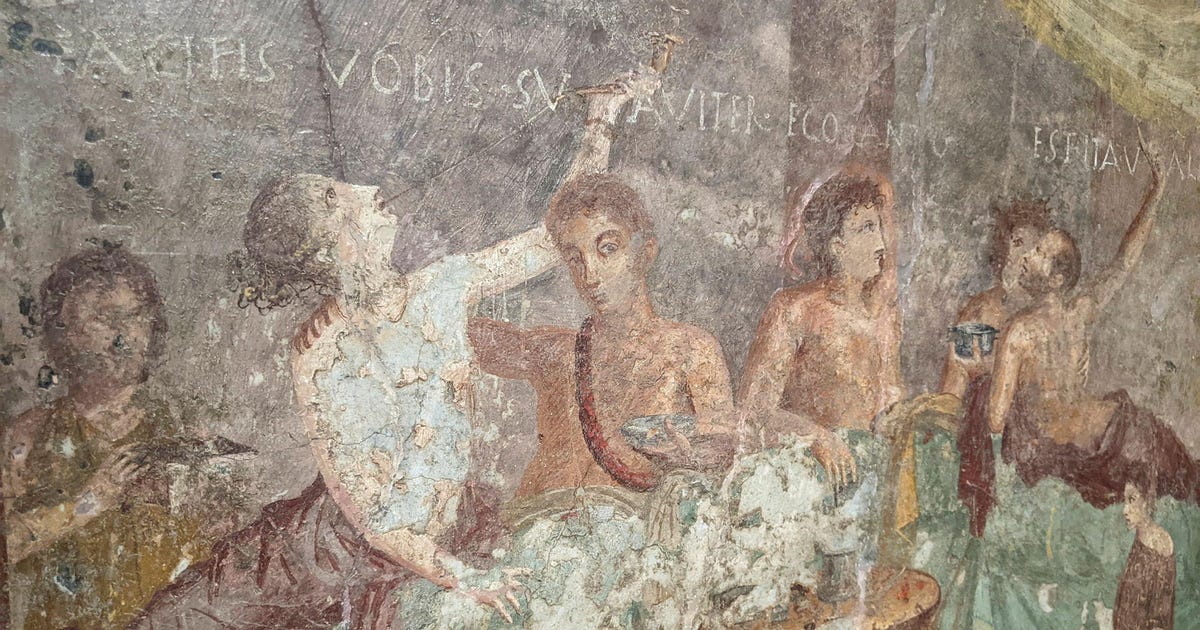
This spartan reality dissolved as Rome transformed from a regional Italian power into a global empire. The conquest of Greece and the East brought an unprecedented influx of wealth into Rome, reshaping the tastes and habits of its ruling class. Increasingly, aristocratic prestige was measured by two hallmarks of excess: extravagant, multi-course convivia and an inexhaustible stream of wine. In this new era, gluttony became a status symbol, a way for the ultra-wealthy to emphasize their vast fortunes.
Yet, while lavish dining was celebrated, the body itself was expected to remain disciplined. While the elite celebrated culinary excess, they despised its visible toll. To the Roman eye, a heavy physique betrayed a soft, effeminate mind, violating the sacred cultural ideal of continentia, or self-restraint.
Roman society viewed weight solely as a moral report card. Obesity was not recognized as a medical condition, nor was excessive weight viewed as a symptom of an underlying illness. To the Romans, there was no such thing as hormonal imbalance or hereditary predisposition. Carrying excess weight was viewed strictly as a moral failure: a visible proof of a weak mind.
Because body weight was interpreted entirely through this lens of personal responsibility, carrying extra pounds became a serious political liability, particularly among the patrician elite. Roman logic dictated that if a man could not master his own appetite, or present himself with dignity, he certainly should not hold a public office.
Thus, excess body weight became a potent political weapon. Rivals and historians alike seized upon it as visible evidence of moral weakness, transforming physical size into a metric of moral legitimacy. A bloated torso became a visible confession of vice. For instance, historians like Suetonius and Tacitus would permanently bind emperor Vitellius to the image of a grotesque, insatiable glutton rather than a merely incompetent ruler. Their vivid descriptions of his supposedly extravagant banquets and corpulent physique were intended not merely to ridicule his appearance but to present his undisciplined body as visual proof that he was fundamentally unfit to rule Rome.

Be beautiful and multiply
If a Roman man’s body was regarded as a measure of his capacity to govern, the bodies of Roman women were subjected to even greater scrutiny, with their physicality closely bound to expectations of domestic duty. Society trapped them in a paradox, demanding they maintain flawless elegance while simultaneously serving as highly productive vessels for childbearing.
Because an elite woman’s primary civic duty was to produce legitimate citizens, a certain degree of roundness, specifically full hips and a soft abdomen, was welcomed as visual proof of health, and maternal capacity. However, the moment the female softness crossed into what men deemed excess, approval vanished.
Roman fashion favored a delicate upper body: narrow waists, delicately slim shoulders, and ideally, small breasts. Achieving this standard often required physical interventions. Roman matrons and young girls turned to structural binding, tightly wrapping their torsos in linen or leather bands to forcibly compress their bodies into the required silhouette.

Because a woman’s body was regarded as a direct reflection of her family’s public honor, any deviation from this physical ideal invited social scrutiny. In a deeply patriarchal and fiercely judgmental society, satirists such as Martial and Juvenal capitalized on this scrutiny by turning female bodies into objects of ridicule. They routinely targeted women whose figures had been altered by age or indulgence, reinforcing the belief that weight gain was evidence of a lack of discipline and a reflection of weak character.
In his Satires, Juvenal mocked wealthy women who spent their days drinking heavily and eating to excess, describing them as bloated, repulsive and morally degenerate. To avoid becoming the targets of such public mockery, elite women aggressively managed their weight through strict dietary control and physical regimens.
Yet, they faced spatial constraints that men did not. While men were encouraged to exercise openly in public spaces, elite women were expected to pursue these bodily ideals in isolation. They managed their figures within the privacy of their households. Thus, the social burden placed on women was uniquely restrictive: they were encouraged to remain slim, while remaining discreet, and largely hidden from public view.
The purge protocol
When private discipline failed against temptations, the elite turned to extreme measures. If there was an ancient equivalent to a magic weight-loss pill, it was the practice of vomiting and purging.
The act of self-induced vomiting at banquets was entirely real. The philosopher Seneca lamented the practice among the elite: “They vomit so that they may eat, and they eat so that they may vomit.”
For Seneca, this cycle epitomized the moral decay of an aristocracy consumed by luxury. Yet despite its notoriety, routine vomiting was never a socially accepted weight-loss protocol. Roman medical authorities explicitly warned against it. In De Medicina, the first-century Roman medical writer Celsus condemned the practice of habitual vomiting, warning that it weakened digestion and gradually damaged the body.
Still, the obsession persisted. For those unable to induce vomiting naturally, Roman physicians prescribed emetics. These were far from harmless remedies. Among the most potent was white hellebore, which, in carefully measured doses, provoked violent vomiting and diarrhea. The difference between a therapeutic and a lethal dose, however, was dangerously narrow. Even a slight excess could disrupt the heartbeat, trigger convulsions, or prove fatal, making white hellebore one of the most dangerous substances in the ancient medical repertoire.
Importantly, most Greco-Roman physicians did not prescribe hellebore for vanity or weight management. It was reserved for severe conditions such as epilepsy, depression known as melancholy (which was already then regarded by some as a sickness), and certain mental disorders, where purging was believed to expel harmful bodily humors, especially “black bile.” No respectable physician would have prescribed it simply to help a wealthy Roman fit more comfortably into a toga.

But wherever demand exists, unofficial remedies inevitably follow. When emetics weren’t enough, some Romans turned to powerful laxatives. Substances such as scammony resin and other harsh substances were used to aggressively stimulate the digestive system, reflecting the lengths to which some Romans would go in pursuit of physical ideals.
The appeal was obvious: enjoy Rome’s feasts without suffering the physical price of overindulgence. Long before modern pharmaceutical commercials began framing every routine bodily discomfort as a condition requiring a prescription, even marketing remedies to help us “feel light” after a heavy meal, ancient Romans had already mastered the dangerous art of consuming a poison just to cure a buffet.
For those who preferred a more active and healthy approach to managing their weight, the Roman thermae, the great public bath complexes, functioned as the closest thing antiquity had to a fitness center. A visit often began in the palaestra, an exercise courtyard where members of the male elite engaged in wrestling, boxing, weight training, running, and vigorous ball games, all intended to elevate the pulse and induce heavy sweating. Only after the workout did they move into the laconicum, a superheated, dry-sweating room comparable to a modern sauna, with the explicit goal of sweating out the weight, together with bodily impurities.
Reliance on sweat and exertion wasn’t just a recreational trend. It was backed by the era’s leading medical minds. For instance, Galen of Pergamum, the Greek physician who served as Marcus Aurelius’ personal doctor, advised intensive exercise and morning runs before eating. He believed that exercising on an empty stomach encouraged the body to draw upon its reserves. Many of his broader recommendations, including attention to diet, exercise, and individualized treatments, bear a striking resemblance to aspects of modern health practices.

The philosophical war on gluttony
If doctors provided the physical protocols for weight management, it was the philosophers who wrote the era’s most radical dietary guidelines.
The medical dangers of Roman dieting did not escape the notice of Rome’s intellectual elite. The Stoics, in particular, viewed the cycle of overeating and subsequent desperate dieting not just as a physical failure, but as a form of mental slavery. To the Stoic mind, a man enslaved by his stomach was unfit to exercise civic responsibility.
Musonius Rufus, a leading first-century Stoic, went a step further, arguing that a plant-based diet was an absolute necessity for a healthy body and a clear mind. He maintained that overindulgence, particularly in meat, made the physical body sluggish and actively eroded mental clarity, ultimately compromising the rational faculty (hegemonikon). Rufus famously maintained that food should be treated strictly as fuel, advocating for raw vegetables, grains, and wild herbs.
Similarly, the Emperor Marcus Aurelius maintained strict control over his diet, carefully regulating his intake during military campaigns and consuming only minimal rations to preserve the clarity of mind he believed necessary for effective governance. In his private reflections, “Meditations” he used a form of philosophical reframing to diminish the appeal of certain things he deemed luxurious. For example, the widely prized Falernian wine he argued was nothing more than fermented grape juice, and a roast pig was the remains of a dead animal.

To the Stoics, the extraordinary lengths to which wealthy Romans went to manage their weight represented misguided attempts to cure a symptom rather than confront the underlying reality. The true solution was never a harsher emetic or a more grueling regimen; it was voluntary fasting and the cultivation of internal psychological discipline. True wellness, they argued, could not be found in a cycle of purging, but in the sustained mastery of desire.
The obsessions of Rome’s elite with a “perfect” body reveal an uncomfortable truth: While esthetics, medical theories, and treatments evolve, the social currency of the body remains remarkably unchanged. Both ancient Rome and the modern world reward the illusion of effortless self-mastery, even as they surround the privileged with unprecedented abundance. In both eras, a lean physique represents far more than mere health – it serves as a definitive symbol of status, discipline, and belonging.
Ultimately, the true parallel between Rome and today’s “Ozempic society” lies not in the methods used, but in the enduring belief that the human body is a public metric of character and success. Ultimately, both worlds share the same defining paradox: they foster absolute excess while demanding that its evidence remain invisible.