A terrorist stabbed a flight attendant and forced his way into the cockpit of a plane bound for Turkey with 170 people on board. The pilots reported they were under attack, transmitting the international hijack alarm code. When the Boeing 757 landed at Istanbul’s Atatürk Airport, the terrorist had already been neutralized by two security officers, one of whom was traveling undercover among the passengers. No one was injured.
That plot dated to 2002; the terrorist, Tawfiq Fukra, wanted to “redo 9/11″ by crashing into Israel. Shortly afterward, Israel ran a simulation: a skyscraper struck by an aircraft in the Israeli city of Givatayim. It was the first exercise of its kind, a scenario similar to the attack on New York’s Twin Towers.
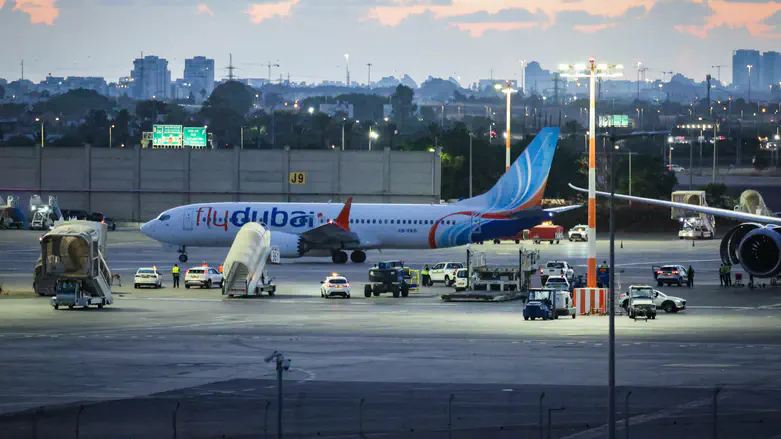
The plot foiled in Dubai-an Omani pilot who wanted to crash a Flydubai flight bound for Tel Aviv with 180 Israeli passengers on board-has brought back to mind numerous attacks stopped by Israelis. Another 9/11 was interrupted at cruising altitude thanks to the intervention of Israeli passengers. Some call it “militarization of the sky.” That is a euphemism used by people who live under sleepier skies.
Take the case of the spy Israel infiltrated into ISIS, who provided intelligence on a plan to bring down a passenger jet in Europe using a bomb hidden in a laptop. According to information Donald Trump incautiously revealed to the Russians, the device had been able to pass airport security checks undetected. The information was so reliable that the United States and the United Kingdom banned laptops in the cabin on many flights from the Middle East.
Here Israel did not stop a single already-boarded flight: it stopped a method intended for dozens of aircraft. Two years earlier, ISIS had already claimed the attack that blew up a Russian airliner over Sinai, killing more than two hundred people.
In 1986, on a flight from London to Tel Aviv, a Palestinian Arab, Nezar Hindawi, planted a bomb in the suitcase of a passenger-his companion, Anne Marie Murphy-who did not know she was carrying it. The plane was carrying four hundred people. The same year, on a flight from Madrid to Tel Aviv, Nasser Hassan al Ali tried to detonate a suitcase on a flight with a hundred passengers on board. Fast-forward to 2006, when an Israeli aircraft was the target of another terrorist plot. This time the plan centered on Frankfurt Airport.
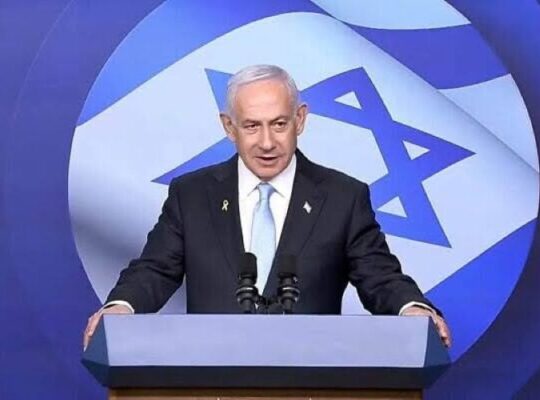
In 2017, an Australian citizen sent his brother to Sydney Airport to board an Etihad Airways flight to Dubai, carrying a bomb disguised in a meat grinder and built on Islamic State instructions. Khaled Khayat and Mahmoud Khayat, the two terrorists, were sentenced to forty years in prison. “Israeli intelligence thwarted the downing of an Australian airliner; it would have been an unimaginable massacre,” Israeli Prime Minister Benjamin Netanyahu said. Australia called it “one of the most sophisticated plots ever attempted on Australian soil.”
A year later, at a NATO summit, Netanyahu revealed that Israel had “stopped dozens of serious attacks, some against civil aviation,” including in Europe, “preventing hijacked planes from crashing into European cities.”
It was political confirmation of what the public sees only a fraction of. Israel had warned Belgian officials weeks before the attack about inadequate security measures at Brussels’ Zaventem Airport. The warning came from Israeli officials tasked with assessing security standards at airports operating flights to Tel Aviv. The Israelis had found “significant shortcomings” at the Belgian airport, which days later became the scene of the attacks. A member of the cell had also wanted to strike the gates for passengers to Tel Aviv and the United States.
This time, only the readiness of the Israelis on board made it possible to avoid a 9/11.
The Jewish State continues to land planes full of the living. The West should thank Israel every day for existing.
Source link