
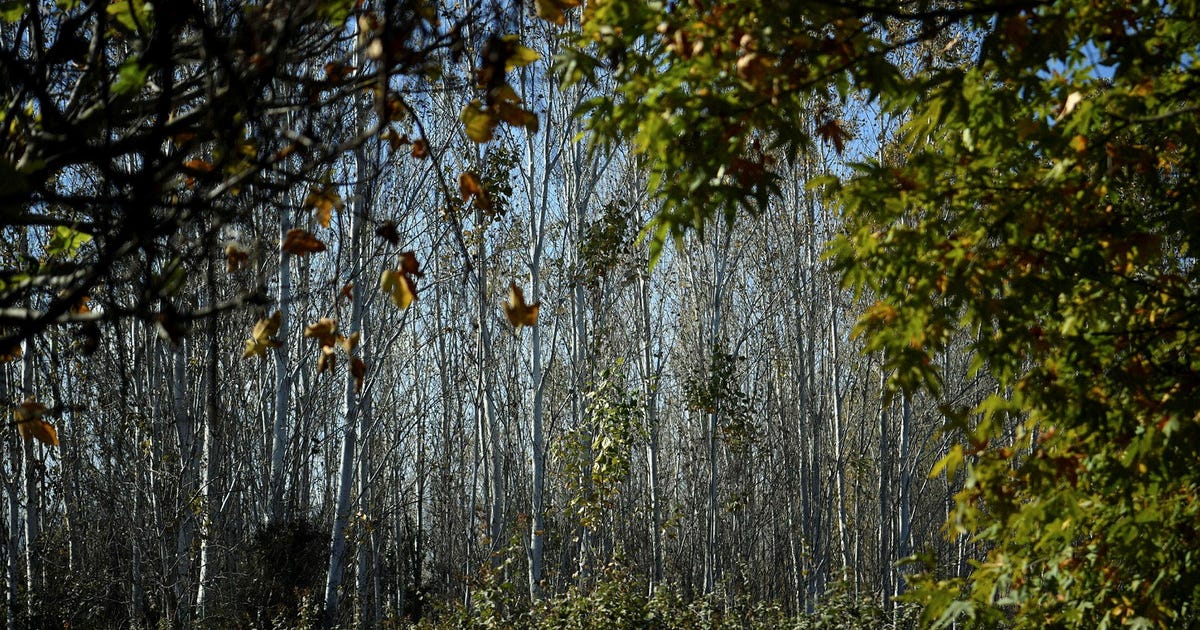
The Oriental plane is tall with a thick trunk and magnificent autumn foliage. Its leaves are large, with five serrated lobes, and when they fall on the stream, they look like hands caressing the water. They’re always beautiful, but in autumn it’s a true joy. The Oriental plane reminds us that the Galilee is like a different country, a European one even, with tall, deciduous trees.

Autumn foliage comes late to Israel. There’s no point in even looking for it before the end of October, and it peaks in November and December. Now the big question is, where should you go to see foliage around here? The arrival of Israeli winter creates the perfect conditions in the Upper Galilee for European-style autumn foliage: cold and altitude. The giant Oriental plane and the golden leaves it sheds is the best companion for an autumn hike.
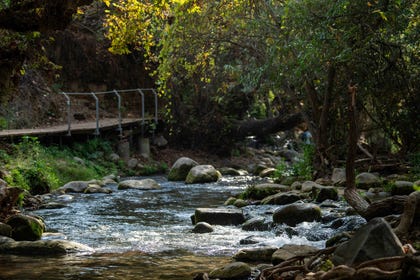
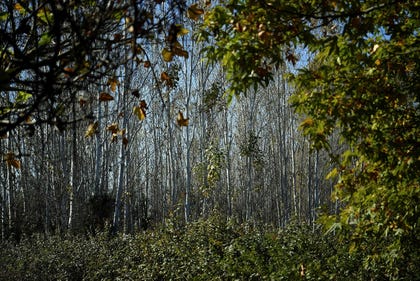
But impatience is a familiar problem. The expectation of finding all of this ready in the last days of October proved disappointing. Snir Stream Nature Reserve, between Kibbutz Hagoshrim and Kibbutz Ma’ayan Baruch, a short distance from the Lebanese border, is the perfect destination for such a hike, but we arrived a little early. The plane trees were certainly there and looked beautiful, but the stunning autumn leaves floating on the stream were few and far between. It was not yet the blanket of leaves I had remembered from previous years, but in the coming weeks, this place will be home to magnificent autumn foliage.

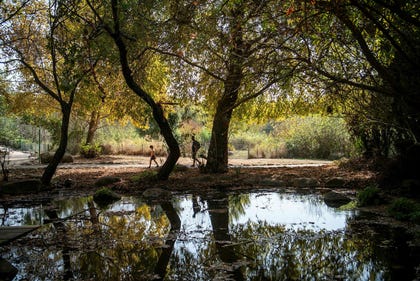
The hike at the Snir Stream Nature Reserve is very easy: The trail is about a kilometer long (red markings) and forms a short loop. It leads to two artificial pools located between the parking lot and the stream bed. One is a wading pool with a tiny waterfall, and the other serves as a sanctuary garden for rare aquatic plants, such as yellow water lily and dwarf marsilea, which have almost disappeared from nature in Israel.
If you walk deeper into the reserve (the blue marker), the trail follows the eastern bank of the stream. Some of the thickest and most beautiful plane trees in Israel grow here. This section of the trail is called the “wet trail” because sometimes there’s no choice but wade across small streams.
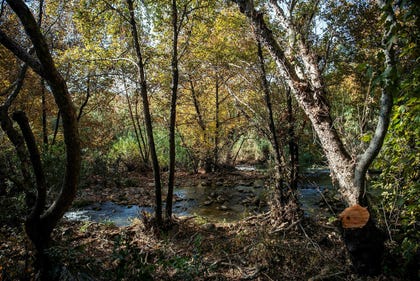
To the left of the path, you will see small waterfalls that channel the waters of Dan Stream into Snir Stream. The water competes with a yellowish rock called travertine (stream tufa). Those who don’t want to descend to the stream bed can view this wilder and more beautiful part of Snir Stream from above. In the northern part of the reserve (about a 20-minute walk), you’ll find a bird hide and a large water reservoir.
Snir Stream Nature Reserve is one of the most beautiful places in Israel, but it’s also threatened by over-management. After all, we come here to experience nature. It’s easy and pleasant for us to ignore human interventions that make things easier for us (an accessible path, a wooden bench, stairs), but what’s the point of putting up prominent signs in the most beautiful spots? Why place a large sign stating that smoking is forbidden precisely between two wonderful pools? The warnings against going into the water are also excessive. It would be better to have one sign placed at the entrance to the reserve to clarify all prohibitions and rules.
Getting there: Set your destination in Waze to Nahal Snir Nature Preserve. The reserve is very clean. Admission costs 31 shekels ($9.77) per adult. Opening hours are daily from 8:00 A.M. to 4:00 P.M. There is a shop and a cafe at the entrance to the reserve.