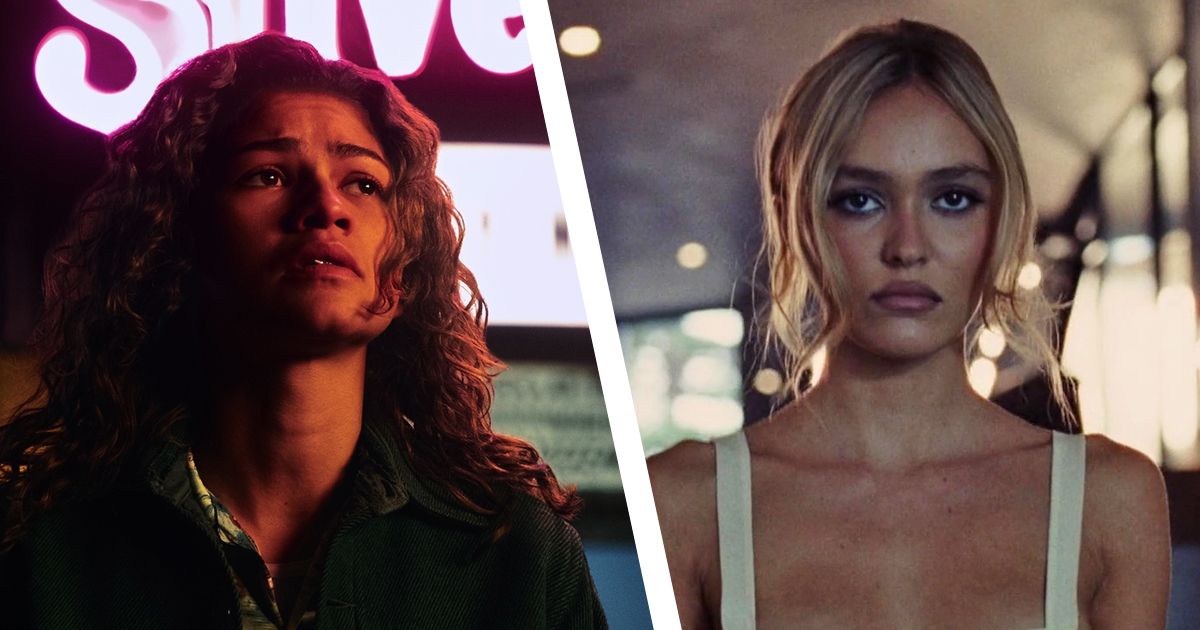

Photo-Illustration: Vulture; Photos: HBO
I have very distinct memories from the summer of 2023 when I watched every episode of The Idol and fired off a text every Sunday night to the effect of “I think this show is doing psychic damage to me.” The Idol was bad, surely, or at least very much not-good. It was stressful and overwrought, violent and stupid, succumbing to the same tropes it was (possibly) trying to critique. Created by Euphoria’s very own Sam Levinson and Abel “The Weeknd” Tesfaye, The Idol told the story of a recovering pop star named Jocelyn (Lily-Rose Depp) trying to get her life and career back on track only to fall under the spell of a seductive and strange talent scout named Tedros Tedros (Tesfaye himself). The Idol underwent several creative overhauls including a departure from the series’ original director, Amy Seimetz, and premiered at Cannes, of all places, to mostly pans. People didn’t like The Idol. I didn’t like The Idol. But what I’m starting to think as the third (and possibly final) season of Euphoria comes to a close is: I miss The Idol.
That’s not to say The Idol was perfect or that it can hold a candle to the early days of Euphoria, but the show’s overarching, if muddled, mission was a much more resonant critique of the industry. While Euphoria’s third season contends with a number of nonactor celebrity cameos (like Rosalía and Trisha Paytas, to name two), The Idol was very much “from the twisted mind of Abel Tesfaye,” who would later go on to write and star in his own movie, Hurry Up Tomorrow, which repeats similar beats: The music industry is a rats’ nest of middle managers and wannabe stars, all angling for a slice of the pie, and being famous is horrible but necessary for a person of certain talents. The relationship between Depp’s Jocelyn and Tesfaye’s Tedros was miserable and frequently yucky to watch — especially as he encouraged her to engage in a grief-processing form of BDSM — but it was a much stranger psychosexual dynamic than anything that’s been happening on Euphoria’s third season. For one, even if Jocelyn was acting under the influence of Tedros, she was a far more active character than most of Euphoria’s this season, blowing in the winds of powerful overlords and bosses. She sought suffering, but it was her choice to do so. The characters in The Idol clearly wanted something, even if that want was terrible. Everyone in Euphoria craves salvation, but they’re doing very little to get there other than spin their wheels. Someone should at least be willing to try something weird, even if it’s just Lexi (Maude Apatow) going for broke on her LA Nights script.
In fact, it’s the very weirdness of The Idol that is lacking in Euphoria, which has become predictable, if not repetitive. Consider last week, when several minutes of the penultimate episode featured Rue (Zendaya) recapping much of what’s happened this season. It’s clear later in the episode that this scene happened only so Lexi could go on to tell Maddy (Alexa Demie) about Rue working with the DEA (who would go on to spill the beans to Adewale Akinnuoye-Agbaje), but in the moment the conversation is tedious and tiresome. Lexi peppers in Rue’s story of her arc that season with an “I’m happy for you or sorry that happened” response, but otherwise it felt like valuable minutes of an already overlong season were used to make sure people glancing at their phones were caught up on the major events. Whereas Levinson’s third season vision features a lot of gross-out gore and scatological humor, it’s missing the spectacle and strangeness of The Idol’s musical sequences and side characters. The Idol understood that Hollywood was bad and evil but also deeply funny: Rachel Sennott, Hank Azaria, and Da’Vine Joy Randolph punctuated the unpleasantness of The Idol with bracing self-awareness. Those actors had legitimate supporting roles that allowed the show to take on an uneven but occasionally enjoyable tone, whereas each week of Euphoria feels like a waste of Sharon Stone’s time.
The Idol was unafraid of musical interludes or Tesfaye’s bizarre indulgences. It wasn’t smart, but it was interesting, if not unnerving. It was a mean-spirited and often gross show, but there was almost a sick pleasure in watching Jocelyn react to Tedros. I mean, his name was Tedros Tedros. That’s funny! If Euphoria’s third season was intended to reset the narrative — make a “spaghetti western” instead of a teen drama — it could have stood to take some of the risks The Idol did: weaponize its celebrity cameos, build elaborate set pieces, draw attention to the fact that this world is fucked and weird and manipulative. Early seasons of Euphoria have that spark. The unreality of Lexi’s play gave us a fun-house mirror of the show cast back onto itself. Levinson’s daring this season has felt all too safe and all too easy — even death is boring. The Idol was canceled, but maybe the lackluster response to Euphoria’s last gasp could bring it back. Or maybe Levinson just needs his own Tedros Tedros to inspire him to greatness.
Source link