
Top diplomats from the Gulf region declared on Thursday that achieving enduring stability requires comprehensively neutralizing the threats posed by Tehran’s missile stockpiles, drone arsenals, and proxy networks.
The foreign ministers further warned that any future economic partnerships or capital investments directed toward Iran will remain strictly conditional and easily undone if the Islamic Republic fails to honor its diplomatic commitments with Washington.
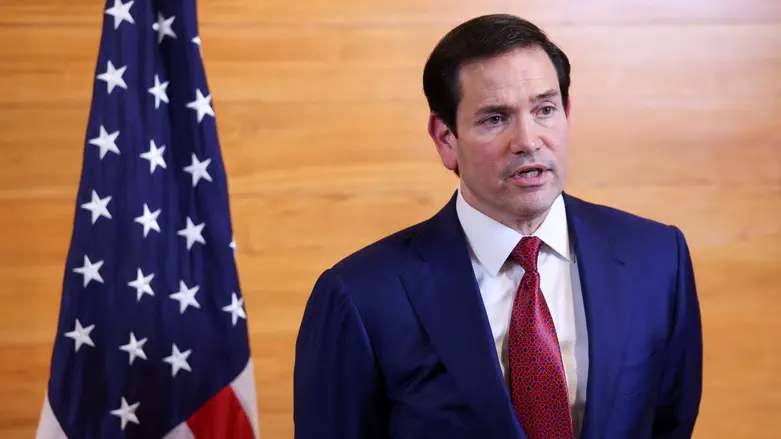
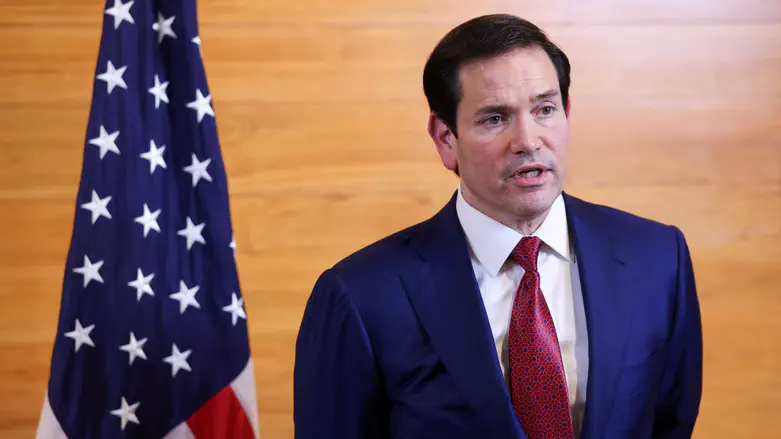
The remarks were formalized in a collaborative communiqué issued after a summit in Bahrain, which was co-directed by United States Secretary of State Marco Rubio.
“The Ministers further emphasized that lasting regional peace and security requires addressing the full spectrum of Iran’s threats, including its ballistic missiles, drones, and support of proxies in the region,” they said in a joint statement following the meeting, as quoted by Arab News.
The statement explicitly tied economic normalization to Tehran’s regional conduct.
“Any trade and investment with Iran is conditional and reversible, contingent on Iran’s compliance with the MOU and the final agreement, cessation of its destabilizing behavior, and creation of the conditions necessary for economic engagement,” they added.
The high-level meeting unfolded amid ongoing secondary negotiations between Iranian and American officials, following the ratification of a preliminary agreement designed to conclude the war. Rubio’s presence in the territory capped off a three-day diplomatic circuit focused on analyzing the evolving framework.
A primary friction point in the current diplomatic theater centers on guaranteeing unhindered merchant access to the Strait of Hormuz, a critical trade artery that Tehran bottlenecked over the course of the fighting.
During the discussions, the Gulf bloc stressed the urgency of unlocking the channel, saying that “free, unconditional, and unrestricted navigation, including the right of transit passage as guaranteed under international law, remains essential to regional and global security.”
The ministers explicitly dismissed any unilateral implementation of transit fees, usage tariffs, or jurisdictional oversight inside the waterway, pushing back against rumors that Tehran intends to tax passing cargo carriers.
The member states of the Gulf Cooperation Council (GCC) previously endured numerous drone and missile strikes during the war, when Iran targeted neighboring territories in retaliation for joint American and Israeli bombardments. While the assembled ministers voiced support for the initial memorandum of understanding between Washington and Tehran, they stressed that both actors must aggressively maintain diplomatic momentum to secure a definitive, long-term peace treaty.
Additionally, the representatives reiterated their unified stance regarding non-proliferation, asserting that they remained fully aligned on the overarching goal “of preventing Iran from ever developing or otherwise acquiring a nuclear weapon.”
On Wednesday, Rubio stressed that Iran must fulfill commitments made during talks in Switzerland.
“We expect them to live up to the commitments they made in Switzerland,” he told reporters. “If they don’t live up to those commitments, the President has a lot of options at his disposal, including, I’m not saying he’s going to do it, I’m saying including reversing these sanctions.”
He added, “They’ve made very straight-up commitments in Switzerland, and the President has been very clear they need to keep those commitments.”
Rubio also emphasized that any future agreement with Iran must be fully implemented.
“If we’re going to get a deal, it has to be a real deal, and it has to be a good deal,” he said. “If Iran wants to make a good and real deal, the United States is open to that. If they’re not, then, of course, the President has options.”
Later on Wednesday, US President Donald Trump reiterated that Iran “will never have a nuclear weapon,” while lauding the US military’s operations in Iran.
Speaking at a rally at the National Mall in Washington, DC, Trump said, “Last week we signed a historic agreement to end the conflict with Iran, fully open the Strait of Hormuz and accomplish what no president has ever been able to accomplish before: Iran will never have a nuclear weapon, that’s done.”
“And thanks to the power and skill of the United States Armed Forces,” he continued, “today Iran has no Navy, no Air Force, no anti-aircraft capacity, no missile launchers, no manufacturing, and their leadership has been obliterated.”
The President expressed confidence that regional peace is coming, saying, “And for the first time in 3,000 years, we are finally going to have peace in the Middle East. We’re going to have peace in the Middle East.”
Source link