
The recent leak of an IDF Military Intelligence assessment-warning Prime Minister Benjamin Netanyahu that a unilateral strike on Iran could ignite a multifront war across Lebanon, Syria, and Gaza-is not a revelation. It is an indictment. For those of us who have watched Israel’s strategic posture over the past two years, this assessment merely confirms a harsh reality: our campaigns against Hamas, Hezbollah, and the Islamic Republic were brought to a premature close (by the USA), leaving the job dangerously half-done.
Rather than serving as an excuse for paralysis, this intelligence warning should be the catalyst for total strategic clarity. If Israel strikes Iran, it cannot afford a symbolic, three-to-five-day exchange designed to “manage” escalation. A short, limited operation will only invite massive, open-ended Iranian retaliation. If we act, we must aim for a knockout blow.
The High Cost of Premature Ceasefires
By giving in to Trump’s pressure for incremental ceasefires and partial understandings, Israel’s political and military establishments-neither of which has been properly purged of the architects of the October 7 failure-have handed our enemies the one resource they needed most: time.
- Proxy Rearmament: Under the cover of quiet, both Hamas and Hezbollah have been steadily rebuilding their shattered capabilities, paying particular attention to their asymmetric drone forces.
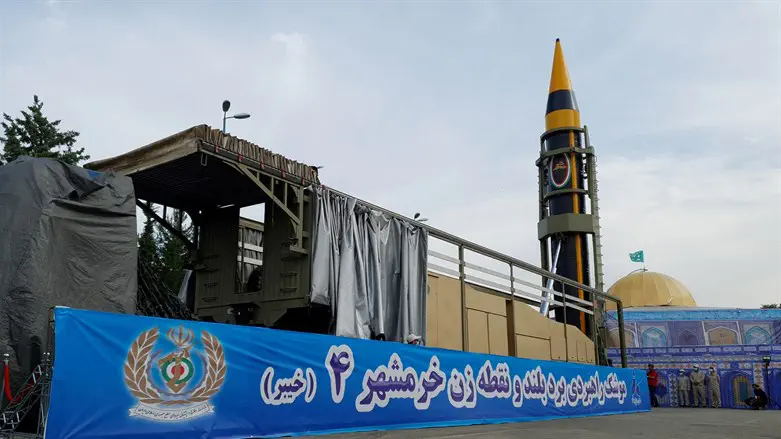
- Iran’s Missile Reconstitution: Tehran has exploited the latest lull to aggressively reconstitute its ballistic missile production lines and air defenses, erasing much of the deterrence achieved in earlier rounds of fighting.
Yet, remarkably, voices within our own leadership continue to misread the board. Yashar party leader Gadi Eisenkot, never one to be mistaken for a deep strategic thinker, recently dismissed the urgency of Iran’s military buildup, arguing that Israel’s sole focus should be on Tehran’s 440 kilograms of unaccounted-for enriched uranium.
This view reflects a profound failure to grasp modern deterrence. You cannot neatly separate Iran’s nuclear weapons program from its long-range ballistic missile force. A nuclear warhead without a delivery system is a laboratory experiment; a massive, survivable ballistic missile arsenal is what turns fissile material into an existential threat-and provides the conventional umbrella under which Tehran shields its nuclear sites. Treating them as separate issues is strategic blindness.
Decapitating the Octopus to Finish the Tentacles
What those vying for leadership fail to understand is that a decisive campaign against Iran is not a distraction from our border threats-it is the prerequisite for ending them.
An Israeli offensive designed to systematically cripple Iran’s strategic infrastructure, energy sector, and missile production capabilities would sever the head of the regional octopus. While Tehran would be forced to spend years digging out from the rubble-a recovery Israel could easily delay through periodic, targeted strikes on its energy and weapons hubs-the IDF would finally have the operational freedom to finish off Hamas and Hezbollah once and for all.
Without Iranian resupply, command, and strategic backing, the remaining terror infrastructure in Gaza and southern Lebanon would collapse under sustained Israeli pressure.
Regional Realities and the American Equation
Critics of decisive action invariably raise the specter of regional devastation, warning that Iran would retaliate by striking Gulf oil fields and water desalination plants. That risk is real. However, commentators routinely forget that deterrence cuts both ways: the Gulf states possess advanced air forces and defensive capabilities capable of inflicting severe, lasting damage on Iranian infrastructure in return. Tehran’s leadership knows that widening the war to the Arab Gulf would invite its own economic ruin.
More importantly, Washington would not remain a bystander. Should a full-scale confrontation erupt, the Trump administration would have little choice but to enter the fray decisively. Faced with Iranian attacks on regional energy supplies and American assets, the United States would be compelled to unleash its full military weight-not merely to contain the Islamic Revolutionary Guard Corps (IRGC), but to dismantle its command-and-control networks, obliterate its weapons arsenals, and create the conditions for the regime’s overthrow.
The Choice Before Us
The leaked IDF intelligence report should not scare Israel into submission; it should wake us up from the illusion of limited wars. You cannot deter a fanatical regime with half-measures, nor can you secure Israel’s borders while leaving the sponsor of our enemies intact. The multi-front threat is already here, growing stronger with every passing month of inaction.
The only question left is whether Israel will strike on its own terms to finish the war-or wait until our enemies are ready to finish it for us.
Source link