We know that Homo erectus emerged in Africa and spread to Eurasia, where it survived until just 107,000 years ago – a mere eyeblink in terms of human evolution. In time, on both continents, they would encounter at least two other human species – Neanderthals in Europe and Denisovans in Asia.
Now analysis of enamel proteins from the teeth of six Homo erectus individuals who lived in China around 400,000 years ago shows they had Denisovan genes too. The requisite conclusion is that these two distinct species not only met but mated, Qiaomei Fu and colleagues reported in Nature on Wednesday.
Current belief suggests that Homo erectus emerged in Africa over 2 million years ago and quickly spread beyond that original homeland to Eurasia. En route, it passed through Israel, and indeed Ubeidiya has been identified as a site from 1.9 million years ago linked to that migration.
Neanderthals, Homo sapiens and Denisovans arose from a branch in Africa that split off the hominin tree perhaps around 800,000 years ago. The branch that would produce Homo sapiens stayed in Africa. Another branch migrated to Eurasia and produced Neanderthals and Denisovans there.
Thus it is that erectus, originating in a migration 2 million years ago, met Denisovans, who emerged on another branch of the human tree in Asia less than a million years ago.
It isn’t the point here, but erectus was once thought to be the first hominin to leave Africa, and the only one to do so 2 million years ago. Apparently, that’s all wrong. At least one other archaic hominin also left Africa about 2 million years ago – a small one. But the small one isn’t part of this story.
So where did erectus and Denisovans meet and mate – and what can it tell us about the tangled state of our own DNA?

Love is in the Hexian air
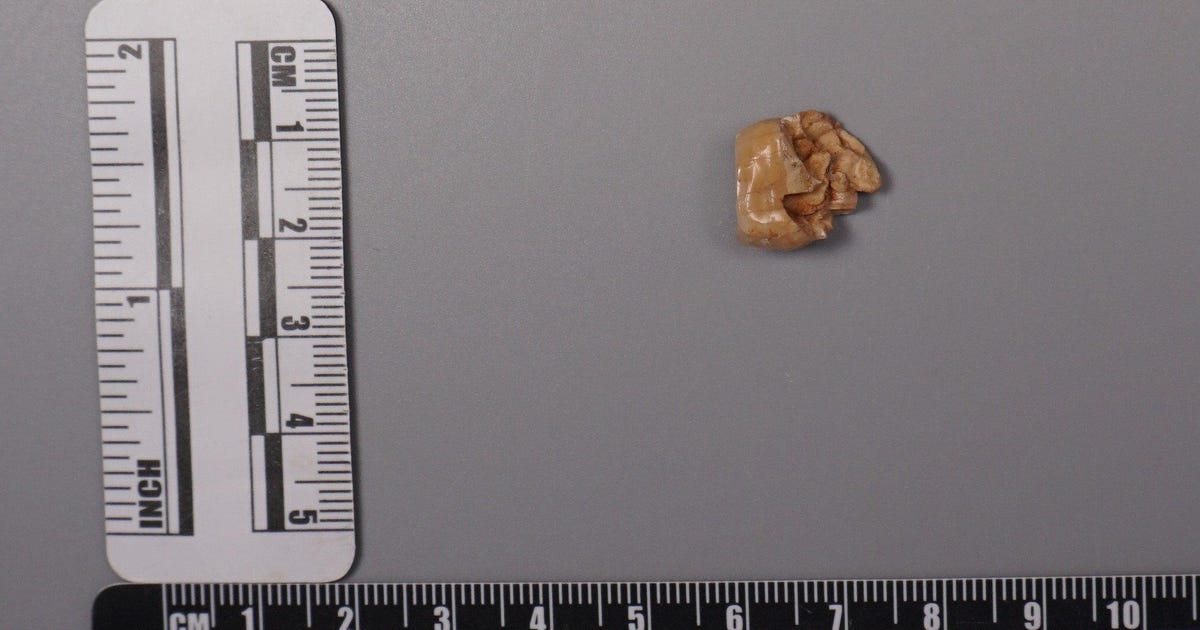
The new research is based on analysis of tooth enamel from five male and one female erectus individuals, all living about 400,000 years ago in China – Zhoukoudian, Hexian and Sunjiadong.
All the erectus individuals from these three sites feature two amino acid variants, the team explains.
One is called “A253G” and has never been seen before. It seems to have been unique to erectus, says the team after looking for it in us. Denisovans, Neanderthals, Homo antecessor from Atapuerca, Spain, great apes and even the so-called erectus from Dmanisi – none have it. Only the six Chinese erectus individuals do.


The other variant, M273V, has been identified in Denisovans and only in them, and now in the Chinese erectuses too.
The requisite conclusion is that erectus and Denisovans met and interbred, producing a population in eastern Asia that retained the Denisovan trait.
This fits with the broader pattern of archaic human behavior. There is ample and growing evidence that our species interbred with Denisovans, Neanderthals and some other archaic hominin as well – erectus again? Maybe. They all had sex with each other.
And then what? We had sex with Denisovans too, in Asia, and now we can fairly speculate that at least some of the genes we inherited from Denisovans originated in H. erectus.


We like to think of ourselves as the epitome of evolution, but hats off to erectus before we wind this down. Its story began in East Africa over 2 million years ago and it survived for almost 2 million years. Fossils identified by Chinese researchers paleontologists as erectus date back as much as 2.1 million years. That is a very successful species. Ours hasn’t even been around half a million years.

So what do we have? Some archaeologists point out that if all these variants on the Homo genus family tree were mixing and mating, they were technically all one species with a very wide range of traits. That is semantics. The remains found at Dmanisi in Georgia, dating to about 1.8 million years ago, have traditionally been described as erectus, but it may be easier to think of them as a more archaic species or variant.
Now we, the self-proclaimed epitome of Animalia, have begun to realize that far from being made from dust by a deity and supernaturally blessed with the kiss of life, we are a variant of primate. Since at several points our sapiens ancestors mixed with Denisovans, and pretty recently too, some of us may also have a whisper of Homo erectus in our chromosomes. Perhaps not that M273V variant, but something else from a time before our species even existed.